
A Warning From Inside the Industry
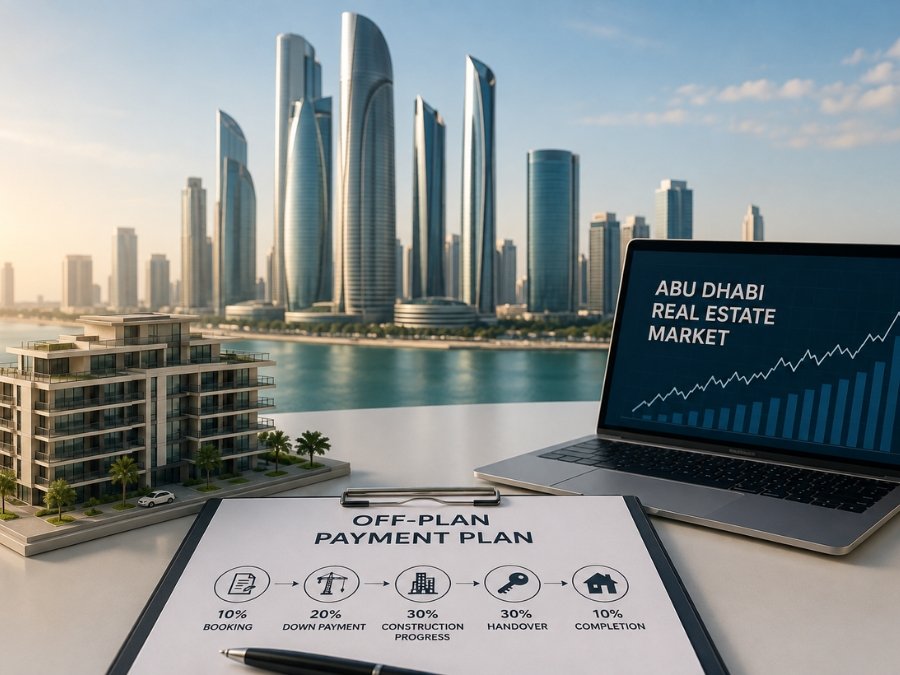
The Gulf’s model of off-plan property sales faces a fundamental shake-up, and developers will no longer be able to rely on buyers’ money to finance projects, according to Dar Global chief executive Ziad El Chaar, speaking to AGBI. He expects the Gulf to move closer to mature European markets, where developers shoulder more of the construction cost before collecting the full purchase price. “The off-plan business model is going down globally,” El Chaar said. “People want to see something progressing to a much bigger extent before they engage. This trend will definitely come to the region.”
That is a significant statement coming from the CEO of a company built around exactly this model. Dar Global, the international arm of Saudi developer Dar Al Arkan, develops luxury property across the Gulf, Europe, and other markets, and is one of the Trump Organization’s main development partners in the region. When a developer of that scale describes his own industry’s dominant funding structure as being on borrowed time, it is worth taking seriously.
What’s Actually Changing, and Why
The shift centres on how heavily buyers are asked to pay relative to how much of a building has actually been built. El Chaar said buyers were increasingly balking at paying more than half the purchase price in the first two years while only around a fifth of a project had been completed, a mismatch that is becoming harder to accept as market conditions grow more cautious.
He pointed to how European markets evolved as a template. France has long tied off-plan payments to construction milestones. Poland strengthened its escrow regime in 2022, releasing funds only as milestones are met, and introduced a guarantee fund to protect deposits. Saudi Arabia is already tying payment schedules to construction progress rather than fixed calendar dates, El Chaar said, offering a regional example of the model he expects to spread more broadly. “The developer has to put in more equity, have a stronger balance sheet to be able to get funding for the projects,” he said.
Why This Matters More in Some Markets Than Others
| Market | Off-Plan Share of Deals | Exposure to Shift |
| Dubai | 70%+ (2025) | High |
| Abu Dhabi | ~89% of sales value (H1 2026) | High, but structurally different |
The impact could be particularly significant in Dubai, where off-plan transactions accounted for more than 70% of property deals in 2025. Abu Dhabi’s own share has run even higher through 2026, with ADREC confirming off-plan transactions made up 89% of sales value and 82% of deals in H1. On paper, that looks similarly exposed to any global shift away from heavy upfront buyer financing.
In practice, Abu Dhabi’s starting point is already more conservative. Developer payments are held in ADREC-regulated escrow accounts and released only upon verified construction milestone completion, rather than flowing freely on signature. That milestone-linked structure is closer in spirit to the Polish and French models El Chaar cites than to a less restrictive upfront collection system.
The Speculation-Curbing Effect
One consequence worth noting is the effect on speculative activity. “The shift could also curb speculative buying by investors hoping to flip a property after the first few payments,” El Chaar said. “I can tell you that globally this is dying out.” A payment structure tied more closely to construction progress makes it materially harder to enter a project cheaply and exit before meaningful capital is committed, precisely the behaviour that can inflate paper demand without reflecting genuine long-term interest.
For Abu Dhabi, where the market has consistently emphasised fundamentals-driven growth over speculative flipping, a broader shift toward milestone-based payments would likely reinforce rather than disrupt the market’s existing character, building on protections already established through ADREC’s escrow requirements and the Owners’ Committee framework under Administrative Decision No. 25 of 2025.
Demand Holding Firm Through Uncertainty
El Chaar was candid about how genuinely difficult regional conditions have affected buyer behaviour without derailing underlying demand. “At times of uncertainty, people will wait, will delay, but they will not cancel,” he said. Dar Global reported that demand for its Gulf projects held up through the recent difficult regional period, with continued international interest despite broader disruption to sales and supply chains.
Customers from 56 nationalities expressed interest in booking Dar Global’s properties between January and June, including buyers from the US, UK, France, Canada, China, Germany, Turkey, Italy, and Australia, alongside established groups from India, Pakistan, and Jordan. That breadth closely mirrors Abu Dhabi’s own H1 2026 figures, where 116 nationalities invested in the emirate’s real estate market, up from 82 the year before, further confirming the delay-not-cancel pattern held across the wider Gulf this year.
What This Means for Abu Dhabi Buyers Right Now
For anyone evaluating an off-plan purchase in Abu Dhabi, two practical implications stand out. First, the regional direction favours payment structures tied more closely to construction progress, generally a positive development for buyer protection. Second, developers with genuinely strong balance sheets, capable of absorbing more construction cost before collecting full payment, are likely to become an increasingly important differentiator, making financial strength a more central part of due diligence.
Abu Dhabi’s largest developers have already been signalling this kind of discipline. Aldar posted an 18% rise in first-half net profit while deliberately moderating new launches, and Modon closed H1 2026 with AED 8.6 billion in unrestricted cash against a net debt to EBITDA ratio of just 0.18x. For buyers wanting to assess which developers are best positioned to absorb this shift without compromising delivery timelines, working with a property brokerage in Abu Dhabi that tracks developer balance sheets alongside project pipelines is increasingly valuable, not just a courtesy service.
One further detail is worth noting as a genuine marker of developer credibility: the regional conflict tested how much developers were prepared to spend to keep construction moving as costs rose, and Dar Global made advance payments to contractors that needed additional cash to keep sites running. “Anybody who needed advance payment, we did it,” El Chaar said. That willingness to front capital rather than wait for buyer instalments is exactly the strength the coming shift is likely to reward. For guidance on which Abu Dhabi projects carry the lowest delivery risk in this evolving environment, consulting a top luxury real estate broker in Abu Dhabi who understands both construction finance and buyer protection is the most complete way to evaluate that risk.
Conclusion
Ziad El Chaar’s comments describe a genuine structural shift underway across the Gulf’s off-plan market, one that will likely require developers to commit more capital earlier and tie buyer payments more closely to verified progress. Abu Dhabi may be better positioned to absorb this shift than some regional peers, given its existing escrow-based framework. What remains consistent across El Chaar’s interview and Abu Dhabi’s own H1 2026 figures is that genuine buyer demand has not disappeared during a difficult period. It has simply become more patient, more selective, and increasingly focused on developer strength as the true differentiator.
Ziad El Chaar told AGBI the Gulf’s off-plan sales model faces a fundamental shake-up, with developers expected to shoulder more construction costs upfront as buyers push back on paying over half the purchase price while only a fifth of a project is built. Explore current opportunities with a trusted property brokerage in Abu Dhabi.
Abu Dhabi’s off-plan share reached 89% of sales value in H1 2026, similar to Dubai’s exposure. However, its ADREC-regulated escrow framework, which releases payments only upon verified construction milestones, already aligns closely with the more conservative models El Chaar expects to spread regionally.
No. El Chaar said buyers delayed but did not cancel, a pattern reflected in Abu Dhabi’s own data, where 116 nationalities invested in the emirate’s real estate market in H1 2026, up from 82 the year before.
As payment structures shift toward tracking construction progress, developers need stronger balance sheets to fund projects before full payment arrives. Aldar and Modon have both demonstrated this discipline through H1 2026, with strong profit growth and conservative debt levels.
Yes. El Chaar said the change could curb speculative buying, since payment structures tied to construction progress make early, low-commitment exits considerably harder. Explore Abu Dhabi’s off-plan landscape with a top luxury real estate broker in Abu Dhabi.
Join The Discussion