
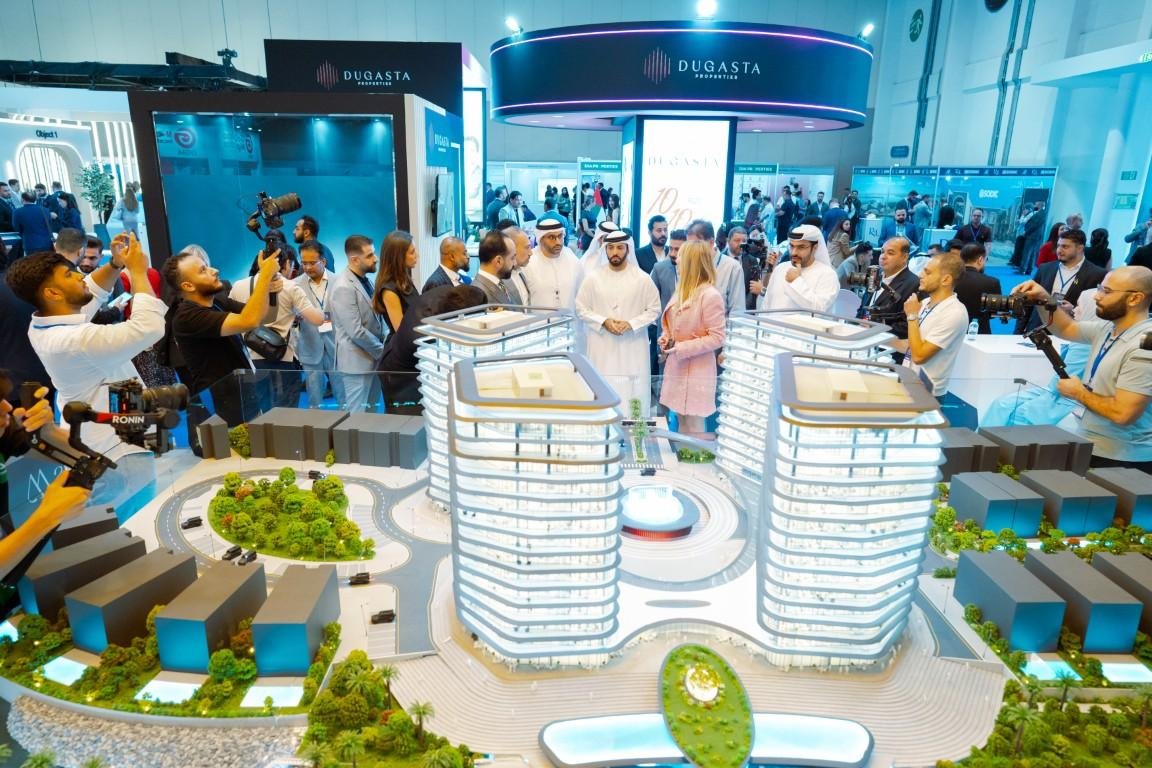
Abu Dhabi has become a major destination for ambitious urban development, with new master-planned communities, waterfront destinations and architectural landmarks continuing to shape the emirate’s real estate landscape. The latest concept unveiled at IREIS 2026 introduces a distinctive vision for how cities of the future could combine technology, sustainability, cultural heritage and everyday convenience.
De Sousa Holdings LLC has presented an ambitious UAE City of the Future masterplan at the International Real Estate & Investment Show (IREIS 2026), held at ADNEC Centre Abu Dhabi. Developed over approximately 25 years, the concept proposes an extensive urban environment designed around efficient transportation, integrated infrastructure and Emirati architectural identity.
According to Emirates News Agency (WAM), the proposed city reflects a philosophy described by the company’s founder and president, Edgar Gerson, as “profit from happiness,” placing quality of life alongside long-term economic and urban development objectives.
The announcement offers a glimpse into an innovative planning concept, although detailed construction schedules, residential sales opportunities and implementation phases have not yet been confirmed.
A New Vision for Future Urban Living in the UAE
Unlike conventional developments focused primarily on individual residential towers or commercial districts, De Sousa Holdings’ concept approaches the city as an interconnected urban environment.
Its masterplan incorporates transportation networks, utilities, recreational facilities, retail destinations and hospitality infrastructure within a coordinated planning framework.
The objective is to create an environment where residents can move efficiently between destinations while benefiting from accessible facilities and well-organised public infrastructure.
This approach reflects the wider importance of master planning in modern real estate development, where long-term community functionality can be as important as architecture and individual property specifications.
For property investors evaluating emerging destinations, understanding infrastructure readiness, future population needs and community planning remains essential. These considerations are also explored in the Abu Dhabi Property Investment Guide by NAS Luxury Real Estate.
An Innovative Clock-Shaped Urban Masterplan
One of the development’s most distinctive features is its unusual clock-shaped layout.
The proposed city has been designed around a circular navigation concept, allowing locations to be identified through clock positions and building numbers.
Rather than depending entirely on digital navigation, residents and visitors would be able to understand the city’s layout through its physical organisation.
Major routes would connect different sections of the development towards the centre, creating a coordinated transportation system intended to minimise unnecessary travel and congestion.
The developer’s stated ambition is to improve mobility, reduce travel time and support more efficient energy consumption.
The concept also demonstrates how a city’s physical structure can influence daily convenience, accessibility and the overall experience of living within a large-scale community.
Emirati Heritage Inspires the City’s Landmark Architecture
Beyond its urban-planning ambitions, the proposed City of the Future places Emirati culture at the centre of its architectural identity.
Several landmark structures draw inspiration from traditional symbols associated with UAE heritage and hospitality.
A central feature is a building designed in the shape of a traditional Arabic dallah, the coffee pot widely recognised as a symbol of generosity and hospitality in Emirati culture.
The structure is envisioned as a five-star hotel, accompanied by seven coffee cups representing the seven emirates of the United Arab Emirates.
Additional architectural elements include two sugar bowls and a date bowl, referencing traditional customs associated with welcoming guests.
The wider composition also incorporates a tray-shaped shopping mall and facilities intended to accommodate conferences, weddings and other gatherings.
Together, these elements form a distinctive architectural concept that integrates cultural symbolism with contemporary hospitality, retail and entertainment functions.
A Landmark Observation Tower Overlooking Abu Dhabi
Another prominent element is a proposed observation tower inspired by the number one.
According to WAM, the tower is planned for an island overlooking the Abu Dhabi Corniche, offering panoramic views of the surrounding city.
The structure draws inspiration from imagery associated with the UAE dirham and is intended to become a recognisable visual landmark.
Although its final height and construction timeline have not been specified in the announcement, the concept demonstrates the developer’s intention to connect modern architecture with symbols of national identity.
A Large-Scale Urban Concept Spanning Approximately 20 by 18 Kilometres
The proposed development is ambitious not only in design but also in geographical scale.
According to the masterplan details presented by De Sousa Holdings, the city is envisioned to extend approximately 20 kilometres from east to west and 18 kilometres from north to south.
The expansive planning concept accommodates a combination of urban infrastructure, commercial functions, public amenities, hospitality facilities and transport connections.
Rather than concentrating all activities within a single commercial centre, the proposed layout aims to connect different urban functions through a coordinated network.
The dimensions illustrate the scale of the concept, although they should not be interpreted as confirmation of an approved construction footprint or completed development area.
Sustainability and Smart Infrastructure at the Core
The masterplan also incorporates essential infrastructure intended to support future urban growth.
According to the developer, planning studies have considered electricity distribution, water supply, internet connectivity, sewerage networks, waste management and recycling facilities.
These systems are integrated into the wider urban concept rather than treated as separate components.
Transportation planning is another important consideration, with the proposed road system designed to reduce congestion and unnecessary movement across the city.
The emphasis on coordinated infrastructure highlights a broader principle in sustainable urban development: the long-term functionality of a community depends on how successfully its essential services are planned and delivered.
However, while these features form part of the announced masterplan, specific environmental performance targets, infrastructure delivery milestones and verified sustainability certifications have not been disclosed.
The Significance of the Announcement for Abu Dhabi Real Estate
The unveiling comes at a time when Abu Dhabi continues to attract attention for its large-scale development programmes, distinctive island communities and expanding luxury residential offerings.
Projects across the emirate demonstrate how master planning, waterfront access, lifestyle facilities and architectural identity can influence the positioning of a real estate destination.
The De Sousa Holdings concept adds another dimension to this conversation by introducing a city-scale vision built around cultural architecture, urban mobility and integrated infrastructure.
For the real estate industry, the announcement reinforces the importance of considering entire communities rather than evaluating properties in isolation.
A well-planned location must ultimately offer more than impressive buildings. Accessibility, long-term maintenance, supporting infrastructure, services and the balance between residential and commercial activity all contribute to how successfully a destination functions.
These are relevant considerations for both local purchasers and international investors exploring property ownership opportunities in Abu Dhabi.
Nevertheless, the new concept should not be interpreted as evidence of immediate investment demand or future price appreciation in surrounding communities. Such conclusions would require confirmed development locations, implementation details and market evidence.
Development Outlook and Future Announcements
While the unveiling establishes the vision behind the City of the Future, its commercial and construction details remain at an early public-disclosure stage.
The November 10, 2026 WAM announcement does not specify residential unit numbers, property configurations, selling prices, payment plans, construction start dates or confirmed handover schedules.
There is also no announced residential sales programme within the information published.
Further official updates will be needed to establish the development’s implementation phases, relevant approvals, project delivery arrangements and potential opportunities for property purchasers.
For now, the announcement is best understood as a major masterplan presentation rather than a confirmed residential project launch.
A Future City Rooted in UAE Identity
De Sousa Holdings’ City of the Future presents an ambitious interpretation of next-generation urban development, bringing together cultural heritage, integrated infrastructure and distinctive architectural design.
Its clock-shaped layout, Emirati-inspired landmarks and focus on transport efficiency distinguish the concept from more conventional development proposals.
Although important implementation details remain unconfirmed, the masterplan illustrates how future cities could incorporate national identity and community functionality into a unified urban vision.
As Abu Dhabi’s property landscape continues to evolve, the development of master-planned destinations will remain an important subject for residents, property buyers and investors.
For those considering opportunities in the emirate today, NAS Luxury Real Estate provides guidance on established communities, available properties and emerging developments across Abu Dhabi.
The City of the Future is an ambitious urban masterplan unveiled by De Sousa Holdings at IREIS 2026 in Abu Dhabi. It features a clock-shaped city layout, integrated infrastructure, heritage-inspired landmarks, hospitality destinations and a focus on efficient urban movement.
The announcement identifies a proposed observation tower on an island overlooking the Abu Dhabi Corniche. However, the precise boundaries and officially confirmed construction location of the wider city have not been established in the published announcement.
Its most distinctive features include a clock-shaped urban layout, a five-star hotel inspired by a traditional Arabic coffee pot, seven coffee cups representing the UAE’s seven emirates, a landmark observation tower and infrastructure planned around efficient transportation and future urban needs.
No residential sales launch, property prices or payment plans were confirmed in the announcement. Buyers interested in currently available investment opportunities can explore properties for sale in Abu Dhabi through NAS Luxury Real Estate.
Large master-planned developments may contribute to the evolution of Abu Dhabi’s property market by introducing new infrastructure, destinations and lifestyle offerings. Their actual investment impact depends on delivery, location, supply, demand and pricing. For broader market analysis and professional property guidance, visit Ayman Sadieh’s official website.
Join The Discussion