
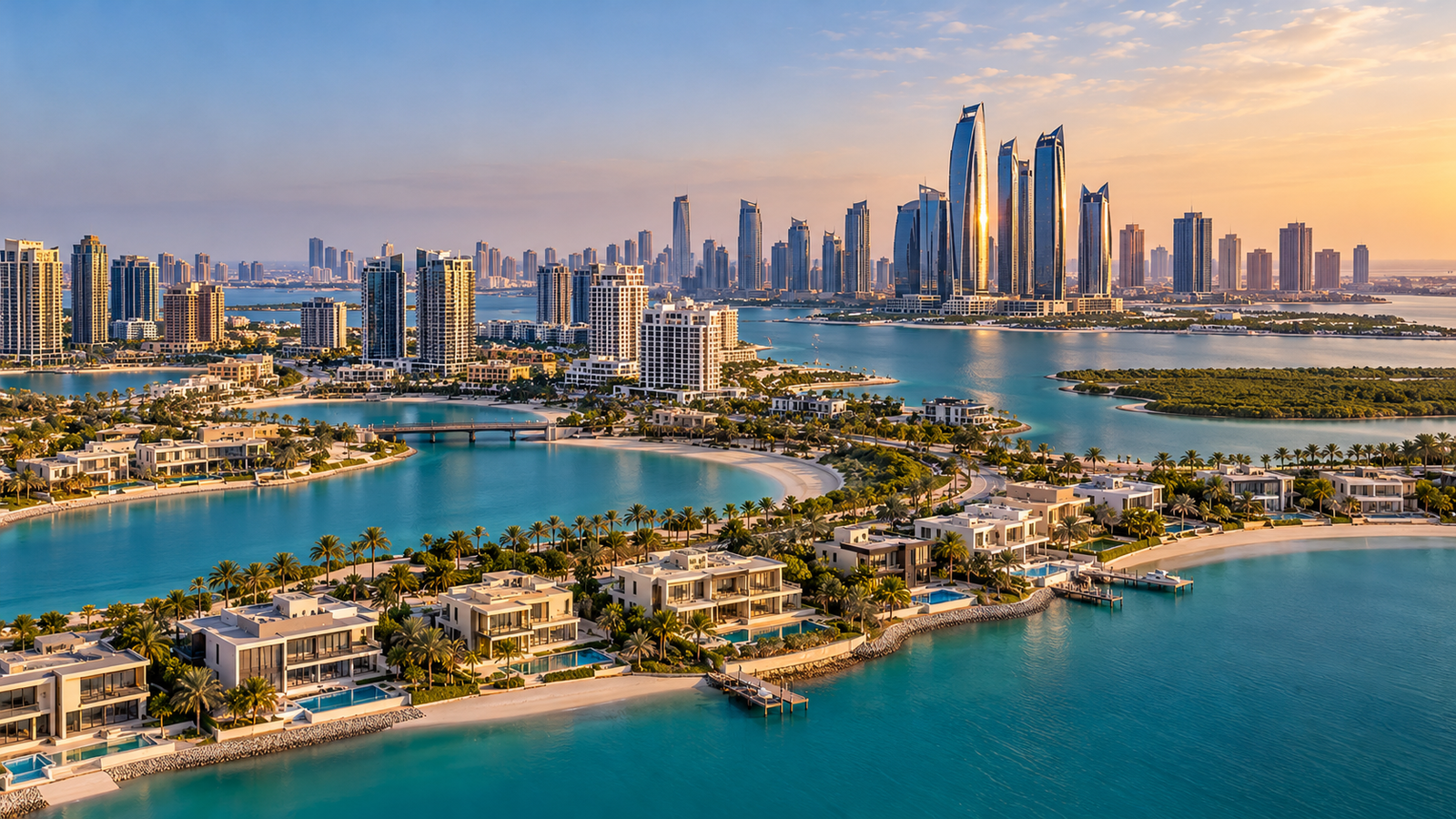
Abu Dhabi’s residential landscape is preparing for one of its most significant periods of expansion, with approximately 71,000 additional homes projected across the emirate by 2030.
According to the Abu Dhabi Real Estate Centre (ADREC), the capital’s residential property market is entering a new development cycle, bringing thousands of apartments, townhouses, and villas into the housing pipeline.
The findings, published in ADREC’s Real Estate Market Report for the first half of 2026, provide an important perspective on how Abu Dhabi’s property market could evolve over the next several years.
With residential supply currently estimated at approximately 409,000 units, the projected expansion could take the emirate’s housing stock to around 480,000 units by the end of the decade, assuming the forecast supply is delivered without offsetting changes to existing stock.
The largest annual delivery volume is expected in 2028, when approximately 21,800 homes are projected to enter the market.
However, the expansion will not be distributed evenly across Abu Dhabi.
Six districts are expected to account for 77% of the projected additional residential supply in Abu Dhabi Region: Saadiyat Island, Al Reem Island, Yas Island, Zayed City, Khalifa City, and Hudayriyat Island.
For property buyers, investors, developers, and residents, understanding where new housing is planned is essential to evaluating future opportunities, market competition, and long-term residential demand.
Abu Dhabi’s Residential Market Is Entering a New Growth Phase
Abu Dhabi’s residential market has experienced sustained expansion over recent years, supported by new development activity and demand from local and international buyers.
ADREC’s H1 2026 report places the emirate’s existing residential stock at approximately 409,000 homes.
The report identifies an average annual increase of 2.9% in residential supply since 2022.
Abu Dhabi Region, which represents approximately 79% of the emirate’s residential stock, recorded average annual supply growth of 3.3% over the same period.
The next development phase is expected to introduce approximately 71,000 additional units across the emirate through 2030.
This represents a projected increase of around 17% relative to the residential stock recorded in H1 2026.
However, the expected homes are not all completed properties or guaranteed future deliveries.
The figures represent ADREC’s supply projections based on registered development activity, inspections, and building permit information.
Construction schedules, regulatory approvals, project progress, and future development decisions can influence the actual number of homes delivered.
The forecast therefore provides insight into the expected direction of the market rather than an absolute completion guarantee.
Why 2028 Could Become a Defining Year for Abu Dhabi Property
One of the most important findings in ADREC’s report is the expected concentration of housing deliveries in 2028.
The authority projects that approximately 21,800 homes could be completed during that year, making it the anticipated peak of the current supply pipeline.
A concentrated delivery period can have several implications for the property market.
New residential communities may introduce more choices for buyers, while existing properties could face additional competition from newly completed apartments and villas.
Landlords may also encounter changes in tenant preferences as newer developments become available.
However, additional housing supply does not automatically mean falling property prices or rental rates.
The impact depends on how many properties are completed, where they are located, their price categories, and whether demand expands alongside supply.
For example, the delivery of new apartments within one investment district may affect that district differently from the completion of limited luxury villas in another location.
The timing of project handovers is therefore particularly relevant for buyers considering properties intended for rental income or resale.
Investors should review the expected completion dates of nearby developments instead of focusing solely on the overall number of homes projected for Abu Dhabi.
Six Districts Expected to Lead Abu Dhabi’s Housing Expansion
The upcoming expansion is expected to be concentrated within six major residential districts.
According to ADREC, Saadiyat Island, Al Reem Island, Yas Island, Zayed City, Khalifa City, and Hudayriyat Island together account for approximately 77% of projected incremental residential supply in Abu Dhabi Region through 2030.
Each location serves different residential needs and investment segments.
Some are established apartment and waterfront destinations, while others are developing larger residential communities that may introduce new housing options over the coming years.
Understanding these distinctions helps explain why Abu Dhabi’s property market cannot be assessed as a single uniform investment destination.
Saadiyat Island: Luxury Development and Cultural Lifestyle
Saadiyat Island is one of Abu Dhabi’s most established premium residential destinations.
Known for its beachfront surroundings, cultural landmarks, and exclusive communities, the island offers residential properties ranging from luxury apartments to high-end villas and branded residences.
The island is home to internationally recognised cultural destinations, including Louvre Abu Dhabi, alongside an expanding collection of residential and lifestyle developments.
New housing projects are expected to contribute to the island’s continued residential evolution.
For luxury buyers, Saadiyat Island remains an important market to monitor because the characteristics of individual properties can vary significantly.
Beachfront access, privacy, residential density, design quality, and proximity to cultural or leisure destinations may all influence property demand.
However, being located on Saadiyat Island does not guarantee future price appreciation.
Investors should evaluate individual developments according to purchase price, construction quality, service charges, comparable transactions, and competing residential supply.
Al Reem Island: A Major Contributor to Abu Dhabi’s Residential Stock
Al Reem Island already represents one of Abu Dhabi’s largest residential markets within designated investment zones.
According to ADREC’s H1 2026 report, Al Reem Island accounted for approximately 27,500 residential units within the investment-zone stock.
The island is known for its apartment developments, waterfront residences, and convenient access to central Abu Dhabi and Al Maryah Island.
Existing residential areas include Marina Square, Shams Abu Dhabi, and City of Lights.
Continued development activity is expected to introduce further residential choices and contribute to the island’s position within Abu Dhabi’s housing market.
For buyers, this creates opportunities to compare established buildings with newer developments.
However, additional apartments can also increase competition within individual rental and resale segments.
Investors should examine building quality, location, service charges, floor plans, views, parking provision, and achievable rental income.
The overall growth of Al Reem Island is important, but the financial performance of individual properties will depend on their specific characteristics.
Yas Island: Expanding Residential Communities and Lifestyle Infrastructure
Yas Island has developed into one of Abu Dhabi’s prominent residential and lifestyle destinations.
Home to Yas Marina Circuit, Yas Mall, Ferrari World Abu Dhabi, and several residential communities, the island combines housing with leisure and entertainment infrastructure.
Its property market includes apartments, townhouses, villas, and new off-plan developments.
Residential destinations such as Yas Acres, Noya, Yas Park Gate, Yas Golf Collection, and other emerging communities offer different property types and price categories.
ADREC identifies Yas Island among the six districts expected to contribute significantly to the residential supply pipeline through 2030.
This expansion may create additional opportunities for families, end users, and property investors seeking different housing formats.
However, the presence of new developments also makes project selection increasingly important.
Buyers should compare existing communities with developments under construction, considering payment schedules, completion dates, build quality, surrounding amenities, and future competing supply.
Those exploring Yas Island properties for sale in Abu Dhabi can evaluate available apartments, villas, and residential communities according to their individual requirements.
The island’s continued development offers meaningful choice, but purchasing decisions should remain grounded in property-specific fundamentals rather than assumptions about guaranteed returns.
Hudayriyat Island: A Growing Destination for Premium Residential Development
Hudayriyat Island is emerging as one of Abu Dhabi’s important destinations for premium residential communities.
Development activity associated with Modon’s master-planned vision has brought attention to the island’s luxury residential offerings, including villa communities and waterfront-oriented developments.
Residential areas such as Nawayef and Al Naseem form part of the island’s developing property landscape.
Hudayriyat Island has also recorded substantial residential sales activity.
According to ADREC, the island generated approximately AED 19 billion in residential sales value during H1 2026, representing around 27% of the emirate’s recorded residential sales value for the period.
This highlights the scale of transaction activity associated with the destination.
However, sales value is not the same as completed housing supply, and strong sales activity does not establish guaranteed future appreciation.
As new residential communities progress towards completion, buyers should pay attention to handover schedules, infrastructure, construction standards, and the maturity of surrounding amenities.
For luxury investors, Hudayriyat Island presents a different residential proposition from established high-density apartment markets.
Its suitability depends on the individual property’s specifications, pricing, and long-term ownership objectives.
Khalifa City: Established Residential Living and Future Supply
Khalifa City is an established residential district known for villas, family-oriented neighbourhoods, educational facilities, and access to major road connections.
Unlike some of Abu Dhabi’s island destinations, Khalifa City has a substantial low-rise residential character.
Its housing market serves a range of residents, including families seeking larger homes and access to established community services.
ADREC includes Khalifa City among the six districts expected to account for a significant share of future residential supply.
Additional housing may broaden the selection of homes available across the district.
For landlords and property buyers, the key question is how new residential stock will compare with existing homes.
Property condition, layout, parking, accessibility, privacy, and maintenance requirements can all influence tenant and buyer preferences.
As more properties become available, well-maintained homes with practical layouts and competitive pricing may be better positioned to attract interest.
However, future demand and rental performance should be assessed using current local market evidence rather than relying exclusively on broad supply projections.
Zayed City: Long-Term Residential Expansion
Zayed City is another important location within Abu Dhabi’s projected housing supply growth.
As a developing urban district, it offers opportunities for residential expansion alongside future infrastructure and community development.
Its inclusion among ADREC’s six principal supply-growth districts highlights its importance within the emirate’s longer-term residential planning.
Unlike established beachfront destinations, emerging urban districts may appeal to buyers seeking different property formats, community environments, and development stages.
However, the investment considerations can be different.
Infrastructure availability, construction progress, access routes, schools, retail facilities, and the pace at which neighbourhood services become operational may influence the residential experience.
For buyers considering homes in developing locations, the timing of infrastructure and residential delivery is particularly important.
Future growth potential should not be confused with a guarantee that every planned facility or property will be completed by a particular date.
What the New Housing Supply Means for Abu Dhabi Property Prices
A major question arising from ADREC’s forecast concerns the potential effect of additional housing supply on property prices.
The relationship between supply and prices is influenced by several factors.
If the number of homes increases faster than buyer or tenant demand within a particular segment, competition may place pressure on prices, rents, or the time required to secure occupants.
Conversely, strong demand, desirable locations, and a limited supply of particular property types may support pricing even as total housing stock expands.
The impact is unlikely to be identical across Abu Dhabi.
A newly completed apartment in a high-density district may face different competitive conditions from a luxury waterfront villa within a limited residential community.
Buyers should therefore distinguish between overall market supply and the availability of genuinely comparable properties.
ADREC’s H1 2026 report also highlights the strength of the market during the reporting period.
Repeat-sale prices increased by 20% year-on-year for apartments and 12% for villas, while new-lease prices rose by 17% for apartments and 9% for villas.
These figures describe market conditions during the reporting period. They are not forecasts of future price growth.
As residential deliveries increase towards 2030, investors should monitor how asking prices, completed transactions, rental demand, and occupancy evolve.
Off-Plan Properties Will Play an Important Role in Abu Dhabi’s Future
Off-plan developments are expected to remain important to Abu Dhabi’s residential expansion.
ADREC reported residential unit sales of AED 70.4 billion during H1 2026, with off-plan transactions accounting for 89% of sales value and 82% of transactions.
These figures demonstrate the scale of activity in properties purchased before completion.
The authority also estimates that development projects will account for 77% of Abu Dhabi Region’s residential supply growth between the second half of 2026 and 2030.
The remaining 23% is projected to come through building permits.
For buyers, the off-plan market offers opportunities to consider properties with staged payment schedules and future handover dates.
However, the presence of a large development pipeline means individual project selection remains essential.
Buyers should evaluate developer credentials, project registration, contractual payment obligations, anticipated completion dates, construction progress, and the surrounding residential supply.
They should also consider whether the development is intended for personal occupation, long-term rental ownership, or eventual resale.
Those researching off-plan properties in Abu Dhabi can compare new developments across Yas Island, Saadiyat Island, Hudayriyat Island, and other residential destinations.
Importantly, a projected handover date should not be treated as a guaranteed completion date. Actual delivery depends on construction progress and the relevant contractual and regulatory requirements.
How Additional Housing Could Influence Abu Dhabi’s Rental Market
The rental market is another important area to watch as new homes enter Abu Dhabi’s residential stock.
According to ADREC, the emirate recorded approximately 233,000 active residential lease contracts in H1 2026, representing AED 9.3 billion in lease value.
Contract volumes increased by 2% year-on-year, while total lease value rose by 8%.
Rental units accounted for 69% of occupied residential units in Abu Dhabi Region, demonstrating the importance of the rental sector.
As new apartments and villas are completed, tenants may gain access to a wider range of properties.
In districts where several developments are delivered within a similar period, landlords may face additional competition.
However, modern facilities, convenient locations, strong building management, and appropriate rental pricing can all influence property appeal.
For investors, this makes realistic rental projections essential.
A property’s advertised rental yield should be assessed alongside service charges, maintenance costs, property management, and potential vacancy periods.
Long-term rental performance will depend not only on how many homes enter the market, but also on the characteristics and demand for individual properties.
New Development Does Not Automatically Mean Oversupply
The announcement of 71,000 additional homes may raise concerns about whether Abu Dhabi will experience an oversupply of residential property.
However, the forecast alone cannot answer that question.
Oversupply occurs when available housing exceeds demand within a particular market or segment to an extent that affects occupancy, rents, or prices.
To assess that risk properly, analysts must consider both new housing deliveries and the factors influencing residential demand.
These can include population changes, household formation, employment opportunities, relocation, affordability, and the location and quality of available homes.
The distribution of new supply is also important.
An increase in mid-market apartments may not directly compete with a limited number of premium waterfront villas.
Similarly, homes scheduled for delivery in different districts or years may experience different market conditions.
The ADREC projection provides valuable information about expected future supply, but it does not guarantee either a property boom or a market correction.
The more useful approach is to monitor supply and demand within the specific communities and property categories relevant to each purchase.
A More Competitive Market Could Give Buyers Greater Choice
One potential benefit of increasing residential supply is a broader selection of properties.
As additional developments become available, buyers may be able to compare more locations, layouts, amenities, and payment structures.
This may encourage closer evaluation of property quality and pricing.
For example, an end user searching for a family villa may compare established communities with newly delivered developments based on available space, schools, transport connections, and the cost of ownership.
An investor considering an apartment may focus more on achievable rental income, service charges, and competing supply within the same district.
Luxury buyers may continue to prioritise privacy, design, location, and distinctive property features.
The important point is that expanding supply can create more alternatives, but it does not guarantee lower prices or better investment returns.
The advantages will depend on the properties actually delivered and the market conditions at the time.
What Property Buyers Should Monitor Between 2026 and 2030
The period leading up to 2030 may involve significant changes in the availability of residential property across Abu Dhabi.
Rather than focusing exclusively on projected total supply, buyers should monitor several practical indicators.
Actual handover activity: Compare completed properties against announced developer delivery schedules.
Community-level supply: Review how many similar apartments, townhouses, or villas are being added within the intended purchase area.
Rental market performance: Examine achievable rents, tenant demand, occupancy, and the time required to lease properties.
Comparable sales: Evaluate actual transaction prices rather than relying solely on advertised asking prices.
Infrastructure progress: Consider whether roads, schools, retail facilities, and other services are operational or still planned.
Ownership expenses: Review service charges, maintenance requirements, financing expenses, and other ongoing costs.
Resale competition: Assess how many comparable properties may become available when the buyer intends to sell.
For international buyers and long-term investors, these factors provide a more practical foundation for decision-making than headline projections alone.
Why Long-Term Planning Matters More Than Short-Term Predictions
Abu Dhabi’s projected housing expansion presents opportunities for developers, end users, and property investors.
However, the arrival of additional residential supply also reinforces the importance of selecting properties carefully.
The most appropriate investment is not necessarily located in the district with the largest development pipeline.
A high-growth area may offer numerous new residential options, while an established community may provide greater visibility over building quality, current occupancy, and existing rental demand.
Likewise, an exclusive property within a mature neighbourhood may appeal to a different buyer profile from an apartment in a newly developing district.
The decision depends on budget, intended use, financial obligations, risk tolerance, and expected holding period.
Buyers should also distinguish the appeal of the wider community from the characteristics of the individual property.
A strong destination cannot eliminate property-specific risks such as poor layouts, excessive service charges, construction defects, or unrealistic asking prices.
For those comparing different options, NAS Luxury Real Estate’s property buying services provide a starting point for exploring residential properties and evaluating individual opportunities across Abu Dhabi.
Conclusion: Abu Dhabi’s Next Residential Chapter Is Taking Shape
Abu Dhabi’s projected addition of approximately 71,000 homes by 2030 represents an important development in the emirate’s residential property market.
With deliveries expected to peak in 2028 and six major districts accounting for most of the projected regional growth, the coming years may bring a broader selection of apartments, townhouses, villas, and premium residences.
Saadiyat Island, Al Reem Island, Yas Island, Hudayriyat Island, Khalifa City, and Zayed City are expected to play significant roles in this expansion.
However, new supply alone does not determine the future direction of property prices, rental yields, or investment returns.
For buyers and investors, the essential consideration is how individual properties compare in terms of location, quality, costs, demand, and long-term suitability.
At NAS Luxury Real Estate, we believe understanding market data is an important part of making informed property decisions.
As Abu Dhabi prepares for its next phase of residential development, buyers who evaluate opportunities carefully will be better positioned to navigate the changing market.
The future of Abu Dhabi real estate will not be defined solely by how many homes are built, but by where they are delivered, who they serve, and how successfully they meet the needs of residents and investors.
According to the Abu Dhabi Real Estate Centre’s H1 2026 report, approximately 71,000 additional residential units are projected across the emirate by 2030. The forecast includes future supply rather than guaranteed completions. Buyers can explore new off-plan properties in Abu Dhabi through NAS Luxury Real Estate while reviewing individual project schedules and availability.
ADREC identifies six districts that together account for 77% of projected additional residential supply in Abu Dhabi Region: Saadiyat Island, Al Reem Island, Yas Island, Zayed City, Khalifa City, and Hudayriyat Island. The combined figure does not establish which individual district will deliver the most homes.
ADREC expects residential deliveries to peak in 2028, with approximately 21,800 additional homes projected for that year. This could increase buyer and tenant choice, but the effect on prices and rents will depend on actual completions, location, property type, and market demand.
The suitability of an investment depends on the individual property, purchase price, rental potential, financing, operating costs, and long-term objectives. Rising supply can create opportunities as well as competition. For additional perspectives on Abu Dhabi’s luxury residential market and emerging developments, readers can explore Ayman Sadieh’s latest property projects.
Not necessarily. Additional housing can increase competition, particularly where similar properties are delivered within the same period. However, property prices are also influenced by demand, location, construction quality, available amenities, and wider economic conditions. ADREC’s forecast does not establish that prices will rise or fall by a particular percentage.
Join The Discussion