
1. Introduction
Prime office vacancy in Abu Dhabi has fallen to 0.1%. Most people searching for a home never connect that statistic to their own house hunt — but it is one of the most direct, underappreciated forces shaping where prices are rising fastest across the emirate right now. Every square metre of Grade A office space that becomes impossible to lease is filled by a company that just relocated staff into Abu Dhabi. Those staff need somewhere to live. And the engine behind almost all of that office demand has a name: Abu Dhabi Global Market.
2. ADGM’s Expansion, in Numbers
ADGM’s growth over the past 18 months has been extraordinary by any financial centre’s standard. Total active licences surpassed 13,353 by Q1 2026, with 961 new licences issued in that quarter alone — a 5.2% year-on-year increase. Financial services entities specifically rose to 365, a 30% jump from 281 a year earlier, while Assets Under Management climbed 57% in the same period. This builds on 2025’s own record year, when operational entities grew 42% to 2,972 firms and the workforce across Al Maryah and Al Reem Islands expanded to nearly 36,000 professionals.
The physical footprint has grown to match. ADGM’s jurisdiction, originally confined to Al Maryah Island, was expanded by UAE Cabinet Resolution No. 41 to include Al Reem Island, giving it a combined area of over 14 million square metres — one of the largest financial districts in the world. Even that expansion is no longer enough. In December 2025, Mubadala and Aldar announced a Dh60 billion-plus expansion of Al Maryah Island itself, adding more than 450,000 sqm of new Grade A office space to effectively double the island’s current supply — a scale of new construction that only makes sense against a backdrop of demand this severe.
3. From Office Lease to Housing Search
The mechanism connecting a corporate lease to a residential transaction is straightforward once you follow it through. A global asset manager — say, one of the trillion-dollar firms like Capital Group or Bain Capital that have recently opened ADGM offices — signs a lease for a floor of office space. That floor needs staff. Senior executives typically relocate with families and look for villas or larger apartments within a short commute. Mid-level analysts and support staff look for one- and two-bedroom apartments closer to the office, prioritising walkability over space.
Almost 40,000 individuals are already based within the ADGM financial district, and that number is set to grow meaningfully as the Al Maryah expansion delivers its additional office capacity. Every one of those professionals represents a household competing for housing within a genuinely limited radius — Al Reem Island itself, Al Maryah Island’s own residential component, and the nearest connected communities.
4. Which Residential Areas Are Feeling It Most
Al Reem Island is the most direct beneficiary, and the data shows it. The island now houses over 40,000 professionals, sustains occupancy rates exceeding 90%, and delivers rental yields in the 5.5% to 6% range — a level of consistency that reflects a tenant base drawn overwhelmingly from corporate employment rather than speculative short-term demand. Al Reem generated Dh2.05 billion in residential transactions in the March to April 2026 window alone, making it consistently one of Abu Dhabi’s most active districts by transaction value.
But the effect does not stop at Al Reem’s shoreline. As ADGM’s professional population grows faster than Al Reem and Al Maryah can absorb it, overflow demand pushes outward. Yas Island, a short drive away with its own growing residential stock, and Saadiyat Island, offering a different lifestyle proposition for senior executives priced out of the immediate CBD radius, both benefit from professionals seeking alternatives within a reasonable commute. Three new bridges connecting Al Maryah Island to Reem Island and the mainland — with enabling works scheduled to begin in 2026 — will also place Saadiyat Island within a 10-minute drive of the financial district, tightening that connection further.
5. Why This Is Structural, Not a Blip
It would be easy to treat ADGM’s growth as a temporary cycle, but the underlying drivers say otherwise. Ahmed Jasim Al Zaabi, ADGM’s Chairman, has described the centre’s ambition to rank among the world’s top five financial hubs — not a short-term target. The financial sector’s contribution to Abu Dhabi’s non-oil economy reached 9.1% in early 2025 and continues to climb as part of the emirate’s deliberate economic diversification strategy away from oil dependency.
This is not a speculative office boom waiting to correct. It is the direct output of sovereign-level policy — zero corporate tax on qualifying income, 100% foreign ownership, and a common law legal system that global institutions trust — combined with a Dh60 billion-plus physical expansion already under construction. None of those forces reverse on a normal market cycle. For buyers evaluating residential opportunities in Abu Dhabi, that structural permanence is the difference between chasing a trend and positioning ahead of one.
6. What It Means for Investors and Buyers
Proximity to a genuine, growing business district is one of the most reliable long-term value drivers in any global property market, and Abu Dhabi is no exception. When comparing two similar-looking residential communities on paper, commute distance to Al Reem Island and Al Maryah Island should weigh heavily in the decision — not as a lifestyle preference, but as a demand fundamental. Properties within walking distance of major employers consistently command premium rents, and waterfront units offering that same proximity attract long-term corporate tenants willing to pay top-tier rates rather than a series of shorter, less stable leases.
For investors specifically, this points toward a straightforward filter: prioritise communities where the tenant base is anchored by corporate employment growth rather than tourism or speculative resale activity. Al Reem Island’s yield consistency exists precisely because its demand is structurally tied to ADGM’s headcount, not seasonal visitor patterns. Working with a capital appreciation specialist in Abu Dhabi who tracks corporate relocation and office leasing data alongside residential transaction records is the most reliable way to identify which communities are next in line to benefit as ADGM’s expansion continues.
7. Conclusion
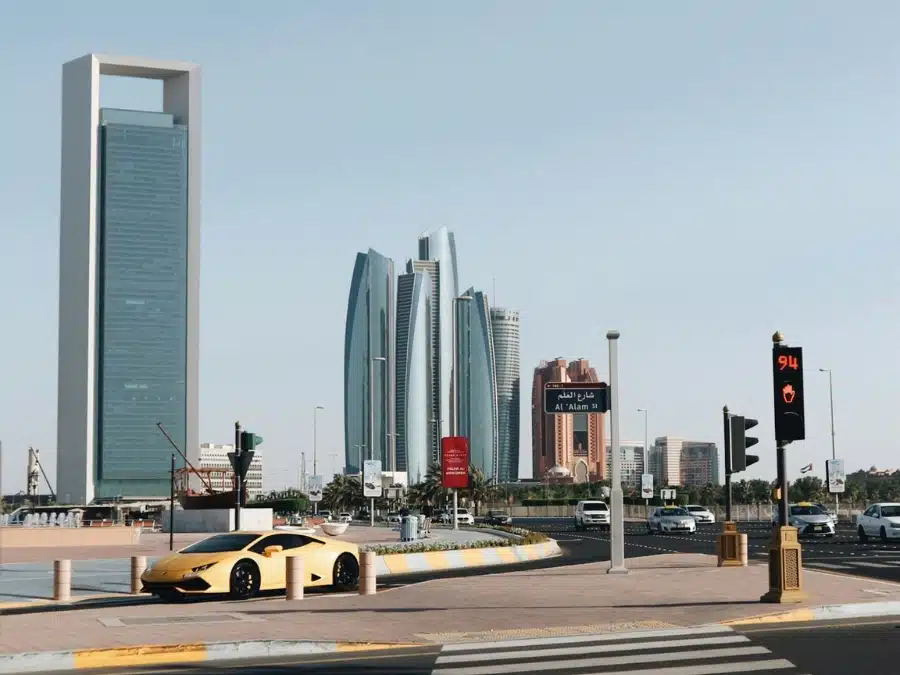
Abu Dhabi’s skyline story and its housing story are the same story, told from two different angles. Every new tower rising on Al Maryah Island, every new licence issued by ADGM, and every basis point of AUM growth eventually shows up as a household searching for a home nearby. The 0.1% office vacancy rate that dominates commercial real estate reports is not a separate market from the one buyers are searching in — it is the leading indicator for it.
Every new company registering with ADGM brings staff who need housing near Al Maryah and Al Reem Islands. With active licences surpassing 13,353 and nearly 40,000 professionals already based in the financial district, this corporate demand directly drives residential transaction volume and rental strength on Al Reem Island and nearby communities. Explore residential opportunities near Abu Dhabi’s financial district.
Al Reem Island houses over 40,000 professionals, sustains occupancy above 90%, and generated Dh2.05 billion in transactions in a single 44-day window in 2026, reflecting demand anchored in ADGM employment rather than short-term speculation.
It is structural. ADGM’s stated ambition is to rank among the world’s top five financial centres, backed by a Dh60 billion-plus Al Maryah Island expansion already under construction and Abu Dhabi’s broader non-oil economic diversification strategy. For guidance on positioning ahead of this growth, consult a capital appreciation specialist in Abu Dhabi.
Beyond Al Reem and Al Maryah Islands themselves, Yas Island and Saadiyat Island are absorbing overflow demand from professionals seeking alternatives within commuting distance, a trend set to strengthen further as new bridge connections place Saadiyat within a 10-minute drive of the financial district.
Prioritise proximity to genuine business districts and a tenant base anchored in corporate employment rather than tourism or short-term demand. Al Reem Island’s consistent 5.5% to 6% yields reflect exactly this kind of structurally supported demand. Browse Abu Dhabi’s top investment communities to compare positioning.
Join The Discussion