
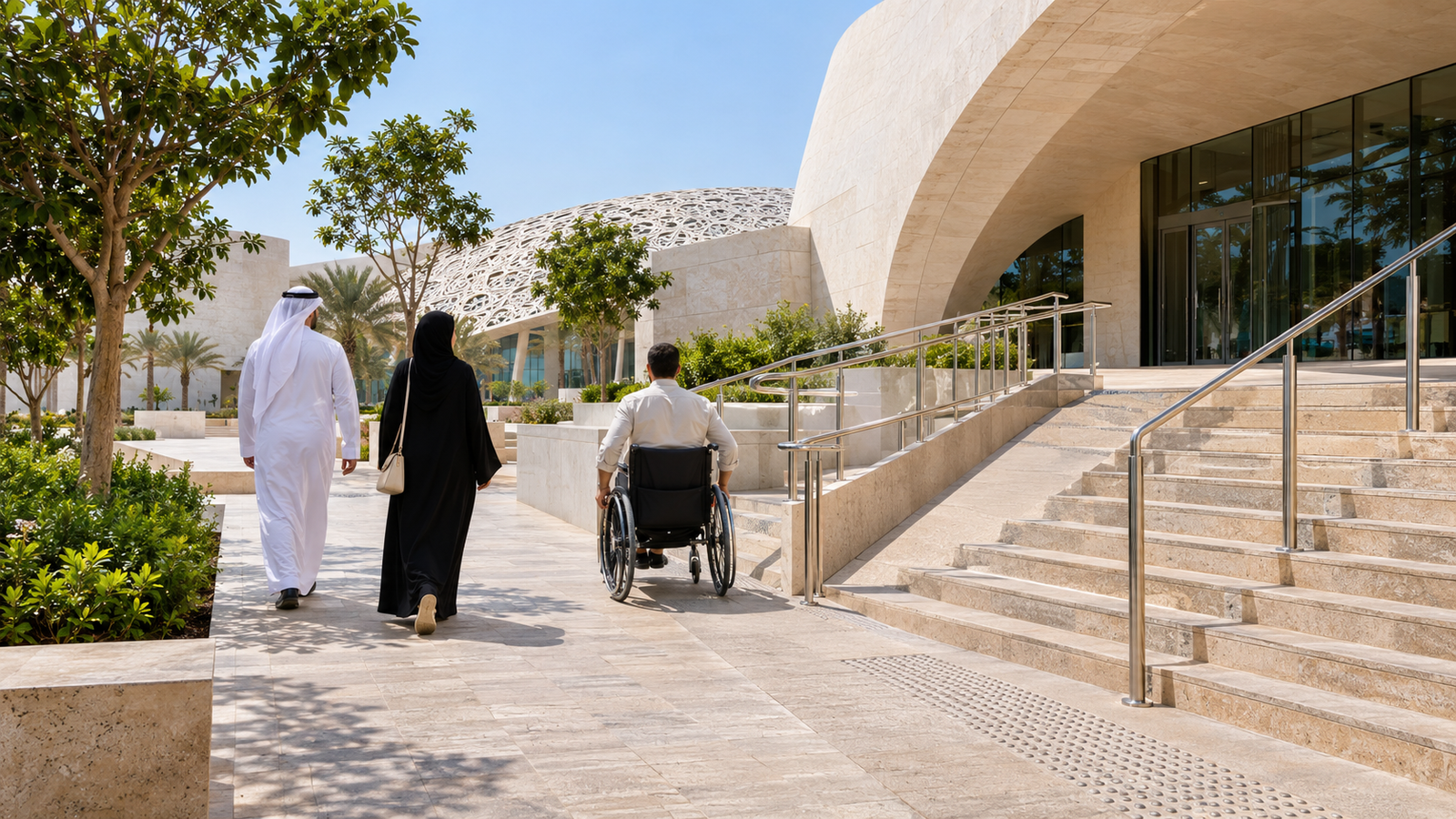
Abu Dhabi is taking another step towards more inclusive tourism with a new accessibility review programme covering more than 250 tourism and cultural sites across the emirate.
The programme is being carried out through cooperation between the Department of Culture and Tourism – Abu Dhabi and the Zayed Authority for People of Determination. It will cover Abu Dhabi City, the Al Ain Region and the Al Dhafra Region.
The sites included in the programme are expected to include hotels, cultural sites, tourist attractions, shopping malls, beaches and other tourism destinations. The aim is to identify barriers and find practical ways to make visits more accessible for People of Determination and their families.
What is the purpose of the new programme?
The accessibility reviews are designed to help tourism facilities understand where visitors may face difficulties. The findings can then support improvements to facilities, services and visitor experiences.
The programme will also focus on creating more consistent assessment methods. It includes training assessors, carrying out field visits and analysing the results. This approach is intended to help tourism providers understand accessibility requirements more clearly and apply improvements in a practical way.
The announcement does not state that every participating venue is already fully accessible. It also does not publish a complete list of the sites, an individual rating for each venue or a detailed timetable for the reviews.
Visitors who require specific accessibility facilities should continue to contact venues directly before travelling. This can help them confirm the availability of features such as step-free access, lifts, accessible parking, toilets, seating and staff assistance.
Building on work that began in 2022
The latest programme builds on cooperation between the two organisations that began in 2022. More than 190 tourism and cultural sites have already been assessed through the earlier work.
The expanded programme will extend the assessment process across more destinations and facilities in Abu Dhabi. It is also expected to support closer cooperation between government entities, tourism providers and individual destinations.
Saleh Mohamed Al Geziry, Director General for Tourism at DCT Abu Dhabi, described accessibility as an important part of developing a destination that welcomes everyone. Abdullah Al Humaidan, Director General of the Zayed Authority for People of Determination, highlighted the importance of understanding the needs of People of Determination and translating technical standards into practical improvements.
The cooperation also complements wider inclusion efforts, including the Damj Award. The award recognises strong practices in inclusive services, inclusive employment, and physical and digital accessibility.
Why accessible tourism matters for Abu Dhabi
Accessible tourism helps more people enjoy hotels, beaches, museums, attractions, shopping destinations and cultural experiences. It can also give families greater confidence when planning trips and activities.
For Abu Dhabi, the programme supports the development of a visitor environment that considers accessibility as part of the overall tourism experience. It covers more than physical entry points. Reviews can help identify barriers connected with movement, information, facilities, communication and participation.
The results may also help tourism providers make improvements based on the needs identified at individual locations. However, the programme is an ongoing assessment and improvement effort. The available announcement does not confirm the final outcome for each site.
What this means for residents and property buyers
A wider network of accessible tourism and cultural facilities can be valuable for residents as well as visitors. People choosing a home may consider how close a community is to beaches, museums, hotels, retail destinations, parks and leisure facilities.
Saadiyat Island is one of Abu Dhabi’s residential and cultural destinations, with homes and communities close to beaches, museums, resorts and lifestyle destinations. Buyers researching the area can explore Saadiyat Island properties and communities and then check the accessibility features of each building and community individually.
The accessibility programme should not be treated as evidence of guaranteed property-price growth, rental returns or investment performance. Those matters depend on separate factors, including the property, developer, supply, demand, service charges, transaction data and ownership costs.
Buyers comparing different locations can also review luxury properties for sale and rent in Abu Dhabi and assess each option according to their budget, lifestyle requirements and intended use.
What happens next?
DCT Abu Dhabi and the Zayed Authority for People of Determination will continue working with relevant government entities, destinations and tourism facilities. The partners aim to expand the reviews and develop practical improvements across the emirate’s tourism sector.
The most useful future information for visitors will be venue-specific. This may include clearer details about available facilities, routes, services and support. Until that information is published, visitors should confirm their requirements with each destination before making travel plans.
More than 250 tourism and cultural sites will be reviewed across Abu Dhabi City, the Al Ain Region and the Al Dhafra Region.
The programme includes hotels, cultural sites, tourist attractions, shopping malls, beaches and other tourism destinations.
The programme is being carried out through cooperation between the Department of Culture and Tourism – Abu Dhabi and the Zayed Authority for People of Determination.
More than 190 tourism and cultural sites have already been assessed through cooperation that began in 2022.
No. The programme is intended to identify barriers and support improvements. It does not confirm that every venue is fully accessible or provide a single accessibility rating for all sites. Visitors should contact the specific venue to confirm the facilities they require.
Join The Discussion