
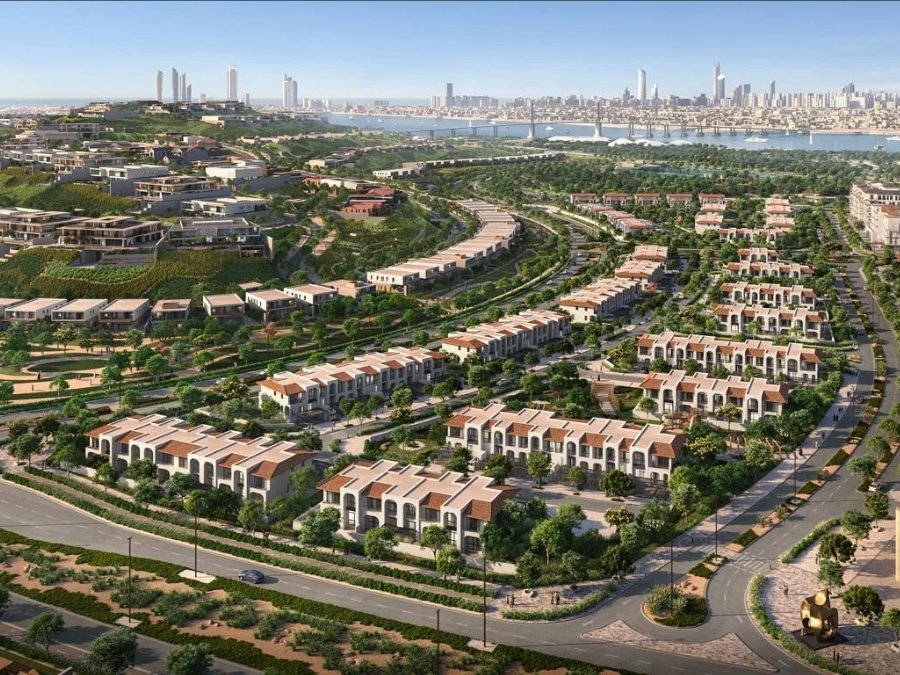
A Single Island Carrying More Than a Quarter of the Market
Al Hudayriyat Island has topped Abu Dhabi’s real estate sales in the first half of 2026, in a clear sign of the property market’s continued resilience through a genuinely difficult regional period. Sales on the island in the six months to the end of June hit Dh19 billion, equating to roughly 27% of total residential units sold across the entire emirate, according to a midyear report from the Abu Dhabi Real Estate Centre. That a single island now accounts for more than one in four residential sales in Abu Dhabi is a genuinely striking concentration of demand, and it tells a clear story about where the market’s centre of gravity currently sits.
Saadiyat Island posted sales worth Dh13.3 billion, while Reem Island and Al Maryah Island collectively recorded Dh10.5 billion. Yas Island, where the incoming Disneyland Abu Dhabi and Sphere Abu Dhabi are currently under construction, recorded sales of Dh7.3 billion. Together, these four island destinations, Hudayriyat, Saadiyat, Reem and Al Maryah, and Yas, accounted for the overwhelming majority of Abu Dhabi’s H1 2026 residential sales value.
The Full District-by-District Breakdown
| District | H1 2026 Sales Value | Share of Total |
| Al Hudayriyat Island | Dh19 billion | ~27% |
| Saadiyat Island | Dh13.3 billion | — |
| Reem Island and Al Maryah Island (combined) | Dh10.5 billion | — |
| Yas Island | Dh7.3 billion | — |
| Total residential unit sales, emirate-wide | Dh70.4 billion | — |
Off-plan projects accounted for almost 90% of that Dh70.4 billion total, confirming that Abu Dhabi’s growth continues to be led overwhelmingly by future supply rather than existing stock changing hands. That level of off-plan concentration is consistent with the emirate’s broader H1 2026 performance, where ADREC’s earlier full transaction data confirmed total real estate transactions across all categories reached Dh117 billion, up 112% year-on-year.
What’s Actually Driving Al Hudayriyat Island’s Dominance
Al Hudayriyat Island’s position at the top of Abu Dhabi’s sales table is not a sudden or isolated event. It reflects a sustained pipeline of Modon-led launches that have consistently generated some of the strongest sell-through rates in the emirate’s recent history, from Wadeem and Bashayer through to the record-setting Hudayriyat Golf Estates launch, which alone generated Dh13 billion in sales within days earlier this year. Combined with the island’s expanding lifestyle infrastructure, Surf Abu Dhabi, the Velodrome, and an extensive cycling and running network, Al Hudayriyat has built a genuinely differentiated identity within Abu Dhabi’s property landscape, one that continues to convert strongly into transaction volume every time a new phase is released.
For buyers and investors evaluating luxury property management Abu Dhabi options across the emirate’s leading island destinations, Al Hudayriyat’s 27% share of total residential sales is not simply a data point to note in passing. It represents the clearest evidence available that this specific island has become the primary engine of Abu Dhabi’s off-plan momentum, ahead of even Saadiyat’s established cultural prestige and Yas Island’s entertainment-driven appeal.
Supply Is Growing, But Deliberately
ADREC’s midyear report also confirmed that residential supply in Abu Dhabi grew by nearly 3% year-on-year to reach about 409,000 units, with investment zones accounting for 22%, or 72,000 housing units, of total supply during the period. Reem Island topped that supply list with about 27,500 units, followed by Al Raha Island, Yas Island, and Saadiyat Island. An additional 71,000 units are projected to reach the market by 2030, with deliveries expected to peak in 2028.
Rashed Al Omaira, Director-General of ADREC, framed the significance of that measured supply growth alongside the sales figures directly: “Numbers measure the market’s movement, but understanding the market requires us to look beyond the numbers, to read the trends, understand what is changing, and assess what those changes mean for investors, developers and decision-makers.” He added: “The first half of 2026 reflects a resilient market, supported by sustained demand, clear regulations, transparent data and a balanced approach to supply and demand.”
Resilience That Extends Well Beyond Real Estate
Abu Dhabi’s property sector has not performed in isolation. The wider hospitality sector recorded the highest occupancy rates in the UAE during the first half of the year, estimated at 66.8% across the six months and remaining steady at 65.2% in June, according to consultancy JLL, as operators increased domestic guest numbers even as broader regional travel patterns were disrupted. That parallel resilience across two closely linked sectors, property transactions and visitor occupancy, reinforces the same underlying picture: genuine, sustained demand for Abu Dhabi as a place to live, invest, and visit, rather than a market propped up by any single favourable data point.
The UAE as a whole was ranked the world’s leading real estate investment destination, with the industry retaining its momentum through a difficult period according to Arada’s UAE Property Investment Index released in June, and Dubai’s own completed real estate investments surged 52% year-on-year to Dh111 billion across 104 developments in the same half-year period, underscoring that this resilience is a national story, not one confined to Abu Dhabi alone. For investors weighing where within that national picture to focus specifically, working with a top luxury real estate broker in Abu Dhabi who tracks district-level data like ADREC’s own island-by-island breakdown is the most reliable way to identify where genuine momentum, rather than simply overall market sentiment, is actually concentrated.
The Regulatory Backdrop Supporting This Growth
Abu Dhabi’s regulator has continued to actively manage the conditions underpinning this growth rather than leaving the market to its own momentum. ADREC’s June 2026 rent freeze, covering residential, commercial, and industrial properties, remains in effect with no increases permitted until further notice, with the notable exception of ADGM-managed communities such as Al Maryah Island and Reem Island. Eight new investment zones were approved in H1 2026, bringing the total to 50, and 28 new real estate developments were registered, a 16% increase from a year earlier, a pace ADREC described as creating new opportunities for local and international investors across the emirate.
That combination of active regulatory management and continued zone expansion gives Abu Dhabi’s growth a structural foundation that goes beyond simple demand momentum. It reflects a market being deliberately shaped and protected, district by district, even as it continues setting new records. For buyers seeking to understand how this regulatory framework interacts with specific district performance, working with a private client property advisor Abu Dhabi who tracks both ADREC’s policy decisions and the underlying transaction data is the most complete way to evaluate where the strongest opportunities currently sit.
Conclusion
Al Hudayriyat Island’s Dh19 billion in first-half sales, representing 27% of Abu Dhabi’s entire residential market, confirms the island’s position as the clear engine of the emirate’s current growth cycle, ahead of Saadiyat, Reem, Al Maryah, and Yas Islands combined in individual terms. Set against a backdrop of near-90% off-plan concentration, steady supply growth, expanding investment zones, and sustained hospitality occupancy, Abu Dhabi’s H1 2026 performance tells a consistent story across every available data point: a market that has continued to demonstrate genuine resilience through a genuinely difficult period, rather than one relying on a single favourable metric to carry the entire narrative.
Al Hudayriyat Island led with Dh19 billion in sales, representing approximately 27% of the emirate’s total residential unit sales, according to ADREC’s official midyear report. Explore luxury property management Abu Dhabi options on the island.
Saadiyat Island recorded Dh13.3 billion in sales, Reem Island and Al Maryah Island combined for Dh10.5 billion, and Yas Island recorded Dh7.3 billion, together with Al Hudayriyat forming the overwhelming majority of the emirate’s residential sales value.
Off-plan projects accounted for almost 90% of the Dh70.4 billion in total residential unit sales recorded during the period, consistent with the broader off-plan concentration seen across Abu Dhabi’s H1 2026 transaction data. For guidance on off-plan opportunities, consult a top luxury real estate broker in Abu Dhabi.
Residential supply grew nearly 3% year-on-year to approximately 409,000 units, with investment zones accounting for 72,000 of those units. Reem Island led supply with about 27,500 units, followed by Al Raha Island, Yas Island, and Saadiyat Island.
ADREC approved eight new investment zones in H1 2026, bringing the total to 50, alongside 28 newly registered real estate developments, a 16% increase year-on-year.
Join The Discussion