
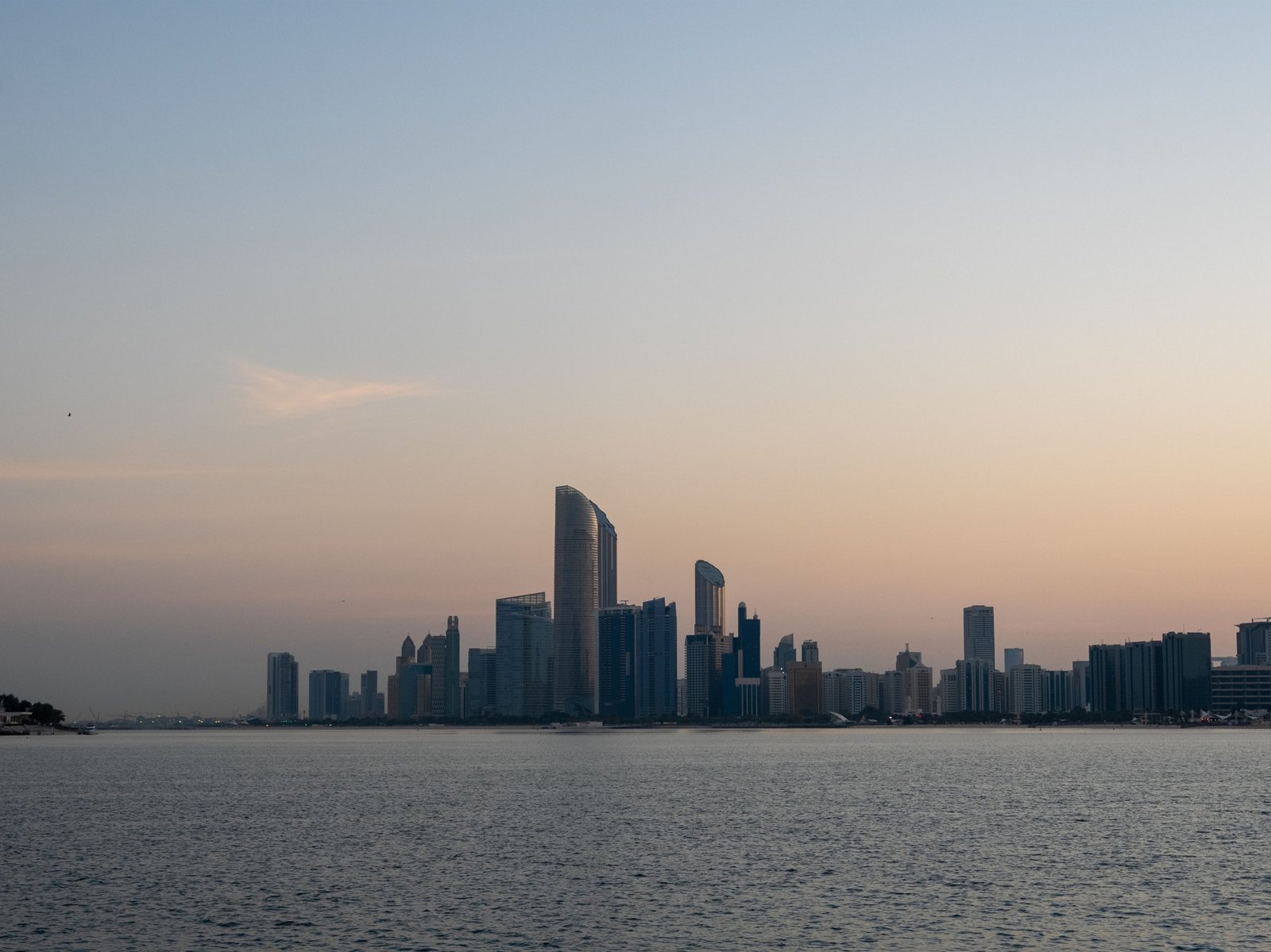
A Debate About Off-Plan Sales, With Abu Dhabi Sitting Apart From It
AGBI’s editor James Drummond recently posed a genuinely uncomfortable question for the region’s developers: is the days of the off-plan sale, as currently configured in the Gulf, coming to an end? The argument rests on a straightforward observation. Off-plan buyers in the Gulf are tied into a fixed payment schedule, while elsewhere in the world payments are typically linked to actual progress on the build, if tied to a plan at all. Many international investors, the argument goes, would rather see the completed building before committing.
That is a fair debate to have. But when the actual Q2 2026 data is placed side by side, it becomes clear the two major Gulf property markets are not experiencing the same story at all. Dubai’s residential transaction volumes were down almost a third in the second quarter, from an all-time high a year earlier. Abu Dhabi’s residential values rose 21.6% over the same period. Whatever structural questions the wider region needs to answer about off-plan sales, Abu Dhabi’s own numbers suggest buyers here have not lost confidence in the model, or in the market underpinning it.
The Numbers That Actually Tell the Story
| Metric | Dubai (Q2 2026) | Abu Dhabi (Q2 2026) |
| Residential transaction volume | ~37,000 (down 29% YoY) | 7,129 (down 9% QoQ, still exceptionally strong H1) |
| Residential values | Sales values fell ~40% YoY | Up 21.6% YoY |
| Apartment price growth | Modest / softening | +24.4% YoY |
| Rental growth | -2.6% annually | +3.6% annually |
| Off-plan share of transactions | ~68-70% | 83-85% |
| Sales value (quarterly) | AED 87.9bn (transaction value fell) | AED 32bn (+150% YoY) |
Analysts tend to fret about leverage, even though they know credit is the accelerator of economies, in this case credit obtained from would-be purchasers. Seventy percent of sales relying on off-plan buyer financing is, by most reasonable measures, too high for comfort in any market. But the fretting applies unevenly. Dubai’s transaction volumes falling almost a third year-on-year, alongside sales values dropping close to 40% in the same period, is precisely the kind of pullback that raises those concerns. Abu Dhabi’s off-plan share sits even higher, at 83% to 85% of transactions, yet its sales values rose 150% year-on-year to AED 32 billion in the same quarter. The same structural feature, a heavy reliance on off-plan buyer capital, is producing dramatically different outcomes depending on which emirate you are looking at.
Why the Divergence Is Happening
Haider Tuaima, head of real estate research at ValuStrat, offered the clearest explanation: “Abu Dhabi’s residential market has remained resilient, with no material evidence of weakening demand.” He noted the emirate remains at an earlier stage in its property cycle compared to Dubai, supported by stronger end-user demand, a structural distinction rather than a temporary one. Consultancy Savills struck a similar tone, describing Abu Dhabi’s underlying fundamentals as resilient despite a genuinely difficult regional backdrop, citing robust end-user demand and continued developer confidence as the supporting pillars.
That difference in market maturity shows up directly in the supply data too. Dubai faces a considerably larger and more visible delivery pipeline, with roughly 350,000 residential units projected by 2030, even accounting for the fact that historically at most half of such pipelines arrive on schedule. Abu Dhabi’s supply cycle remains comparatively far more measured. The emirate completed just 1,834 apartments and 1,620 villas in the first half of 2026, representing under a fifth of the year’s expected residential pipeline, with an estimated 37,700 additional units scheduled through 2030 according to ValuStrat. Simply put, Abu Dhabi still needs housing, and that scarcity is doing real work to support both prices and rents even as buyers elsewhere in the region grow more cautious.
Developer Discipline Is Reinforcing the Resilience, Not Undermining It
Aldar, Abu Dhabi’s biggest developer, posted an 18% rise in first-half net profit even as new launch sales fell 43%, after the company deliberately pulled back on new releases during the difficult period earlier in the year. Chief Financial Officer Faisal Falaknaz called it a more moderated approach, leaning on the company’s substantial existing sales backlog rather than rushing fresh launches into an uncertain window. That is a markedly different posture to a developer under pressure. It is the posture of a company confident enough in its pipeline to slow deliberately, precisely the kind of financial discipline that reassures buyers evaluating luxury property management Abu Dhabi options against Aldar’s own long-term delivery record.
Launch activity across the wider Abu Dhabi market told a consistent story through Q2, with nearly 6,000 new units announced and strong absorption across flagship projects. Modon and Aldar together accounted for over 52% of those launches, concentrated across Hudayriyat Island, Al Reem Island, Yas Island, and Masdar City, with the exceptional response to Modon’s Tara Park and Golf Estates launches underscoring resilient buyer confidence even during a period when a Saudi developer CEO was publicly questioning the sustainability of the region’s entire off-plan model.
The Value Proposition That Still Holds
There is a genuinely simple explanation sitting underneath much of this resilience: relative value. As of July, Abu Dhabi carried a price-per-square-foot of AED 2,005 compared to Dubai’s AED 1,937, according to property portal Bayut, a modest premium that looks considerably more reasonable set against London at roughly AED 2,900 per square foot last year, or New York at around AED 5,500. Villa pricing tells an even clearer story. Apartment pricing in Abu Dhabi is relatively close to Dubai, but villa pricing remains meaningfully lower, making the emirate particularly attractive for buyers seeking more space or a lower entry point in the villa and townhouse segment.
Abu Dhabi’s office market has moved in exactly the same direction as its residential sector, reinforcing that this is not a residential-only phenomenon. Average office rents rose nearly 16% year-on-year in Q2 2026, with occupancy reaching approximately 96%, demand concentrated heavily within the Abu Dhabi Global Market free zone on the back of continued growth across financial services. With less than 300,000 square metres of new office space expected between 2026 and 2027, that supply constraint looks set to persist well into the medium term, mirroring the residential story closely. For investors comparing entry points across both emirates, working with a top luxury real estate broker in Abu Dhabi who understands the structural drivers behind this divergence is the most useful way to evaluate where genuine value currently sits.
What This Means for the Off-Plan Debate
None of this settles the broader question AGBI’s editor raised about whether the Gulf’s off-plan model is sustainable in its current form over the long run. Investors across the region do need reassurance, and a market where 70% or more of transactions rely on buyer financing carries genuine structural risk if sentiment turns sharply. But Abu Dhabi’s own data through Q2 2026, values up 21.6%, apartment prices up 24.4%, rents still climbing, and its largest developer posting stronger profit while deliberately restraining new launches, suggests the emirate’s version of this model is currently being tested by demand outpacing supply, not the reverse. That is a fundamentally different risk profile to a market absorbing a wave of new completions against softening buyer appetite.
Conclusion
The debate about whether the Gulf’s off-plan sales model needs a structural overhaul is a legitimate one, and Dubai’s Q2 2026 numbers give it real weight. But treating the Gulf as a single market obscures a genuinely important distinction. Abu Dhabi’s constrained supply, earlier position in its property cycle, and disciplined developer behaviour have combined to produce a market moving in the opposite direction to its regional neighbour, even while relying on the very same off-plan-heavy structure. For buyers and investors weighing where in the Gulf currently offers the stronger fundamentals, that divergence in the data is difficult to ignore.
No. While Dubai’s residential transaction volumes fell almost 30% year-on-year and sales values dropped close to 40%, Abu Dhabi’s residential values rose 21.6% over the same period, with apartment prices up 24.4%. Explore current opportunities with a best property brokerage in Abu Dhabi.
Analysts at ValuStrat and Savills point to Abu Dhabi being at an earlier stage in its property cycle, supported by stronger end-user demand and a far more constrained supply pipeline, with just 1,834 apartments and 1,620 villas completed in H1 2026 against an expected annual pipeline several times larger.
As of July 2026, Abu Dhabi’s average price per square foot stood at AED 2,005 versus Dubai’s AED 1,937, a modest premium. Villa pricing in Abu Dhabi remains meaningfully lower than Dubai, making it particularly attractive for buyers seeking more space. For guidance comparing both markets, consult a private client property advisor Abu Dhabi.
Aldar posted an 18% rise in first-half net profit even as new launch sales fell 43%, after deliberately taking a more moderated approach to new releases and leaning on its existing sales backlog instead, a sign of financial discipline rather than weakening demand.
Yes. Average office rents rose nearly 16% year-on-year in Q2 2026 with occupancy around 96%, driven largely by demand within the ADGM free zone, and supply constraints are expected to persist through at least 2027.
Join The Discussion