A Quiet Initiative With a Direct Line to Property Value
Not every announcement that moves Abu Dhabi’s property market comes from a developer’s press release or ADREC’s transaction data. On August 7, 2026, the Environment Agency – Abu Dhabi and the Department of Municipalities and Transport announced a new phase of collaboration under the Abu Dhabi Waste Management Strategy, focused on delivering environmental clean-up activities across the emirate’s land, marine, and coastal sites. On the surface, it reads as an environmental governance story. Look closer, and it is one of the more direct structural supports available to the waterfront property values that now anchor a substantial share of Abu Dhabi’s premium real estate market.
Four clean-up campaigns have already been carried out at selected sites, with two specialised marine operations and a series of additional land-based and coastal efforts planned throughout the remainder of the year. The initiative is being delivered in partnership with Tadweer Group, which manages waste collection, sorting, and transport to appropriate treatment facilities, alongside the Abu Dhabi Marine Sports Club, which executes marine operations according to specialised professional standards, supported by a number of diving associations.
Why This Is a Data Programme, Not Just a Clean-Up Programme
What distinguishes this initiative from a standard beach clean-up day is its methodology. The programme adopts a systematic approach that includes waste classification, weighing, and documentation within a structured field database under the Sahim – Citizen Science programme, with the resulting data analysed to identify the most prevalent waste types across terrestrial and marine environments, providing a clear picture of waste patterns and spatial distribution.
That distinction matters for anyone thinking about long-term coastal asset quality. This is not a one-off cosmetic effort ahead of a specific event or season. It is a repeatable, data-driven system designed to identify where waste originates, track patterns over time, and direct resources toward the locations that need them most consistently. Ahmed Baharoon, Executive Director of the Information, Science and Environmental Awareness Sector at EAD, described the shift directly: “Collecting precise data on waste types and quantities enables us to better understand waste patterns, identify potential sources through the Sahim application, and develop evidence-based solutions that support the emirate’s sustainability objectives.”
Why Waterfront Buyers Should Actually Care About This
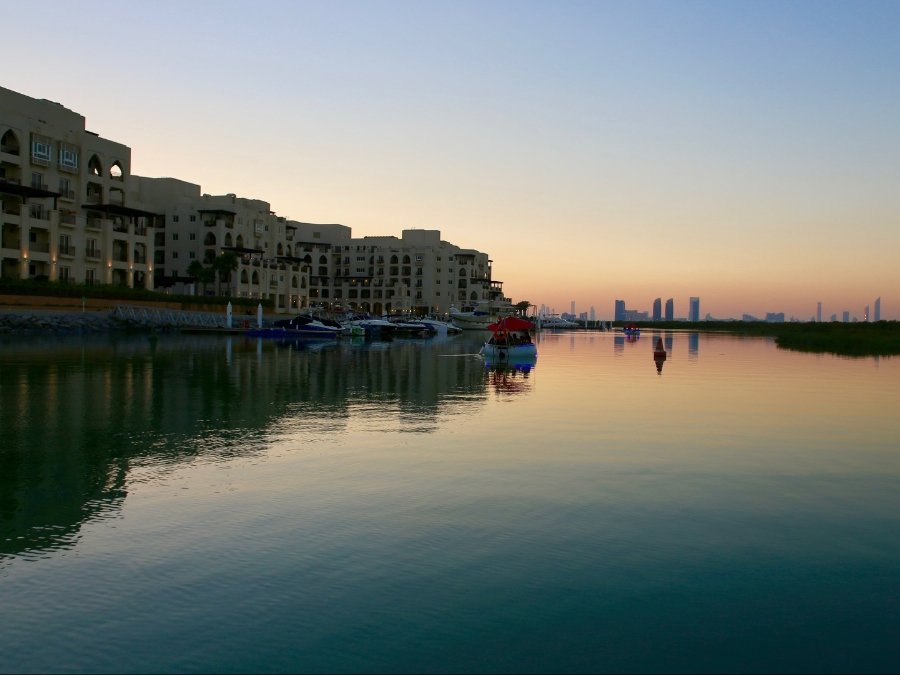
Abu Dhabi’s most valuable and fastest-appreciating residential communities are, overwhelmingly, waterfront communities. In the first half of 2025, ADREC reported a record AED 52 billion in total real estate transactions, a 39% increase year-on-year, with waterfront districts specifically identified as the primary driver of that growth. Al Raha Beach alone saw property prices rise more than 29% in a single year, while emerging coastal destinations like Al Fahid Island, positioned between Yas and Saadiyat with an 11-kilometre coastline, are being built explicitly around mangrove-lined streets and beachfront access as core lifestyle amenities rather than incidental features.
That shift changes what actually protects a waterfront property’s value over time. Developers across the region are now adjusting their masterplans to ensure that views of mangroves and coastal ecosystems are maximised, treating them as a premium amenity comparable to a golf course or a private beach. Nowhere is that logic more visible than at Jubail Island, Abu Dhabi’s AED 10 billion eco-luxury community built around 430,000 mangrove trees adjacent to the award-winning Jubail Mangrove Park, where the ecological asset itself is the primary value driver behind villas priced from AED 10 million to AED 15 million and above. An ecosystem like that only retains its premium value if it stays healthy, clean, and well-managed. A structured, data-led marine and coastal clean-up programme is precisely the kind of ongoing institutional maintenance that protects the natural asset underpinning those valuations, rather than allowing it to degrade quietly in the background.
The ESG Dimension International Buyers Are Already Pricing In
This initiative also speaks directly to a buyer segment that Abu Dhabi has been actively courting: internationally minded, ESG-conscious investors. Global demand for sustainable real estate has been growing at an estimated 20% to 30% annually according to World Green Building Council data, and Abu Dhabi’s developers have responded accordingly, with many new coastal developments now aligning explicitly with recognised sustainability frameworks such as LEED and the emirate’s own Estidama Pearl Rating System.
A government-led, methodically documented environmental monitoring programme sits comfortably alongside that positioning, because it provides exactly the kind of institutional evidence that increasingly sophisticated buyers now expect before committing capital to a coastal asset. Rashed Abdullah Al Kaabi, Acting Executive Director of the Technical Operations Support Sector at DMT, framed the collaboration in terms that speak directly to this audience: “We believe environmental protection is a shared responsibility, and involving the community in these initiatives builds awareness and positive behaviours, while reinforcing a culture of environmental stewardship and the preservation of Abu Dhabi’s urban and natural landscape.” For investors evaluating luxury property management Abu Dhabi options across the emirate’s coastal and island communities, a government partner actively monitoring and maintaining the natural environment those communities are built around is a meaningful long-term reassurance, not a peripheral talking point.
What This Means for Investors Evaluating Coastal Communities
The practical takeaway for anyone comparing waterfront communities across Abu Dhabi is straightforward: the strength of the institutional environmental management behind a coastal address is becoming as relevant to long-term value as the developer’s own construction quality. A beachfront villa or mangrove-facing apartment is only as valuable as the ecosystem surrounding it remains healthy and well-kept, and that upkeep increasingly depends on exactly the kind of structured, government-backed programme EAD and DMT have now formalised.
For buyers specifically eyeing communities like Jubail Island, Al Fahid Island, Al Raha Beach, or the newly launched Marsa Al Saadiyat, this initiative is a reassuring signal that Abu Dhabi’s environmental institutions are treating coastal preservation with the same systematic rigour the emirate applies to its infrastructure and transport planning. Working with a top luxury real estate broker in Abu Dhabi who understands both the property fundamentals and the environmental frameworks underpinning specific coastal communities is the most complete way to evaluate a waterfront asset’s genuine long-term durability, not just its current asking price.
Conclusion
The EAD and DMT waste management collaboration will not generate the kind of headline transaction figures that typically dominate Abu Dhabi property coverage. But for the growing share of the emirate’s real estate market anchored in waterfront and coastal communities, this is precisely the type of institutional groundwork that protects value over the long term, rather than just in the current sales cycle. A data-driven, methodically documented approach to marine and coastal cleanliness is exactly what sophisticated buyers, particularly those weighing ESG considerations, are increasingly looking for before they commit capital to a beachfront or mangrove-facing asset.
Announced August 7, 2026, it is a data-driven environmental clean-up programme covering land, marine, and coastal sites across Abu Dhabi, combining structured field operations with systematic waste classification and analysis through the Sahim – Citizen Science programme. Explore Abu Dhabi’s coastal communities with a best property brokerage in Abu Dhabi.
Abu Dhabi’s fastest-appreciating communities are predominantly waterfront and mangrove-anchored, including Al Raha Beach, Jubail Island, and Al Fahid Island. A structured, ongoing environmental monitoring programme helps protect the natural ecosystems that underpin those properties’ long-term value.
The initiative is delivered by EAD and DMT in partnership with Tadweer Group, which handles waste collection and disposal, and the Abu Dhabi Marine Sports Club, which executes marine operations, supported by several diving associations.
Global demand for sustainable real estate is growing 20% to 30% annually, and Abu Dhabi’s coastal developments increasingly align with frameworks like LEED and Estidama. A government-backed environmental monitoring programme provides the institutional evidence ESG-conscious buyers look for. For guidance on sustainability-aligned communities, consult a private client property advisor Abu Dhabi.
Mangrove and coastal-anchored communities such as Jubail Island, Al Fahid Island, Al Raha Beach, and the newly launched Marsa Al Saadiyat stand to benefit most directly, as their core value proposition depends heavily on the health and upkeep of the surrounding natural environment. Browse these communities with an award-winning real estate agency Abu Dhabi.
Join The Discussion