
The Question Every Existing Saadiyat Owner Should Be Asking
Aldar has explicitly described Marsa Al Saadiyat as the activation of Saadiyat Island’s final masterplan phase. That single word — final — raises a genuine question for anyone who already owns a unit in Saadiyat Beach Residences, Park View, Mamsha Al Saadiyat, or any of the island’s earlier developments: does a “finished” island help or dilute their property’s story? The honest answer is that it does both simultaneously, and which effect dominates for a given owner depends heavily on which part of the island they hold and over what time horizon.
What “Final Phase” Actually Means on the Ground
The practical implication is straightforward. Saadiyat Island has a fixed land area, and Marsa Al Saadiyat activating the last major undeveloped parcel means there is no further significant land bank left to release. Once this phase sells through, the island’s total residential supply is essentially capped. That is a scarcity signal, not a warning sign. Saadiyat’s constrained supply and low-density planning requirements have already been cited by market analysts as a primary driver behind the island’s above-average capital growth, and a formally closed land bank reinforces that dynamic rather than undermining it.
The Case for Increased Value in Existing Phases
Scarcity has historically supported price appreciation on Saadiyat, and the data backs that pattern clearly. Saadiyat apartments appreciated approximately 32% year-on-year as of April 2026 according to ValuStrat, while Saadiyat Beach Villas have seen 25% to 40% appreciation since 2022. Once the island is genuinely complete, existing inventory in mature communities becomes the only way to access an established, amenity-rich address with a proven track record, rather than a buyer waiting years on an unbuilt promise.
Established communities are already demonstrating that this maturity commands real value. Saadiyat Beach Residences, delivered by Aldar back in 2014, currently shows an ROI around 7.8%, with two-bedroom units renting for approximately AED 135,000 to 158,000 annually — figures that reflect a fully operational, landscaped community with a settled rental track record rather than a project still finding its tenant base. Across the island more broadly, apartment yields range from 5% to 8.3% depending on the specific development, with premium beachfront communities like Mamsha Al Saadiyat at the higher end of that range.
The Case for Caution in the Near Term
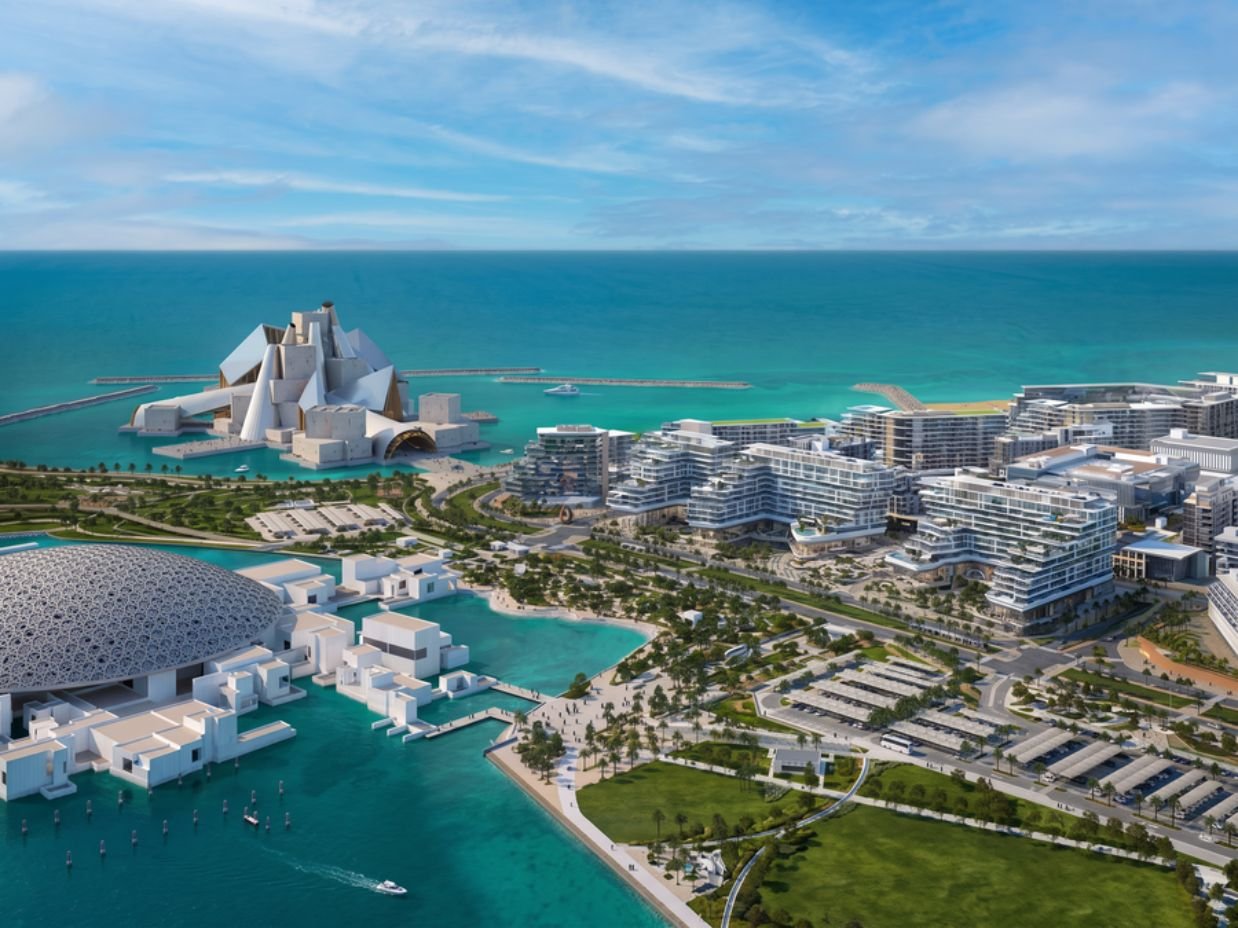
The counterpoint deserves equally fair treatment. Marsa Al Saadiyat is arriving with a wave of brand-new, highly amenitized stock: Abu Dhabi’s largest marina, an 8-kilometre waterfront including 5.6km of beaches, a Frank Gehry-designed theatre district, fresh branded residences, and roughly 140 kilometres of new walking infrastructure. New, purpose-built amenity stock of this scale can pull rental and resale attention toward the newest address in any masterplan, at least until that new phase matures and its own supply is absorbed.
This is a familiar pattern within large island masterplans generally, and Saadiyat’s own history offers a precedent. When Saadiyat Grove and Mamsha Al Saadiyat launched with fresh cultural-district and beachfront positioning respectively, both drew significant attention and premium pricing away from older sub-communities in their early sales periods, even as those older communities continued performing solidly in absolute terms. The realistic expectation for Marsa Al Saadiyat’s first 12 to 24 months is a similar dynamic: strong initial demand concentration in the newest phase, with the island’s more established communities continuing to perform steadily rather than declining, but potentially growing at a comparatively slower pace during that specific window.
What Existing Owners Should Actually Watch
Rather than assuming either outcome automatically, the more useful approach for existing Saadiyat owners is to track two specific indicators over the next 12 to 18 months as Marsa Al Saadiyat’s sales and construction progress. First, rental yield trends in your specific sub-community — a meaningful, sustained softening in achievable rents in Park View, Saadiyat Beach Residences, or comparable earlier phases would be the clearest early signal of demand migration toward the new phase. Second, resale time-on-market — a lengthening in how long comparable units take to sell in older phases, relative to the historical average for that community, is typically the leading indicator before any price effect becomes visible in the data itself.
Neither of these indicators currently shows meaningful strain; Saadiyat’s established communities are still performing within their normal historical ranges as of mid-2026. But given that Marsa Al Saadiyat’s first residential sales are expected in the second half of this year, this is precisely the window in which existing owners should be paying closer attention than usual. For a proper read on how your specific holding is positioned, working with a licensed property consultancy in Abu Dhabi that tracks sub-community level data across Saadiyat, rather than island-wide averages, is the most reliable way to see the real picture.
An Open Question Worth Monitoring, Not a Settled One
Saadiyat Island reaching its final masterplan phase is genuinely a two-sided development for existing owners, and it would be dishonest to present it as unambiguously positive or negative. The scarcity argument is real and supported by the island’s appreciation history. The near-term attention-shift argument is equally real and supported by how earlier phases on the island have behaved during previous major launches. If you currently own property in one of Saadiyat’s established communities and want a clear-eyed portfolio review in light of the island’s completion, our team is ready to walk through what this specific moment means for your specific asset.
Aldar has described Marsa Al Saadiyat as activating the last major undeveloped parcel on Saadiyat Island, meaning the island’s total residential land supply is now essentially capped. This is generally viewed as a scarcity signal that supports long-term value in existing communities, given Saadiyat’s fixed land area and low-density planning approach. Speak to a trusted real estate agency in Abu Dhabi about what this means for your holdings.
Saadiyat apartments appreciated approximately 32% year-on-year as of April 2026 per ValuStrat, while established communities like Saadiyat Beach Residences show ROI figures around 7.8%, with rental yields across the island’s apartment stock generally ranging from 5% to 8.3% depending on the specific development and location.
It may create a temporary demand concentration toward the new phase in its first 12 to 24 months, based on how previous major Saadiyat launches like Saadiyat Grove and Mamsha Al Saadiyat behaved on release. Established communities are not expected to decline, but growth may be comparatively slower during that specific window. For a tailored assessment of your property, consult a capital appreciation specialist in Abu Dhabi.
The two most useful indicators are rental yield trends in your specific sub-community and resale time-on-market compared to historical norms. Neither shows meaningful strain as of mid-2026, but both are worth monitoring closely as Marsa Al Saadiyat’s first residential sales begin in the second half of the year.
There is no universal answer — it depends on your specific community, unit type, and investment horizon. Scarcity-driven appreciation and near-term attention shift toward Marsa Al Saadiyat are both plausible outcomes simultaneously. Get a personalised portfolio review from a licensed property consultancy in Abu Dhabi before making a decision either way.
Join The Discussion