1. Introduction
There is a shift happening in how Abu Dhabi’s newest developments describe themselves, and most buyers have not consciously registered it yet. When Marsa Al Saadiyat was unveiled this month, an AED 100 billion, 6.4 million sqm waterfront district on Saadiyat Island, its official positioning language centred on connection, quality of life, and integrated communities before it ever mentioned unit sizes or finishes. That is not an accident of marketing copy. It reflects a genuine, measurable shift in what Abu Dhabi’s most sophisticated buyers are now prioritising — and it is reshaping how developers design, market, and price their communities.
2. From Specs to Feelings: The Marketing Shift
For much of the past decade, Abu Dhabi property listings led with the same core variables: square footage, bedroom count, and finish quality. Those figures still matter, but they are no longer the opening argument. The language now leading major launches speaks to how a space makes residents feel — walkability, green space, community connection, and access to nature.
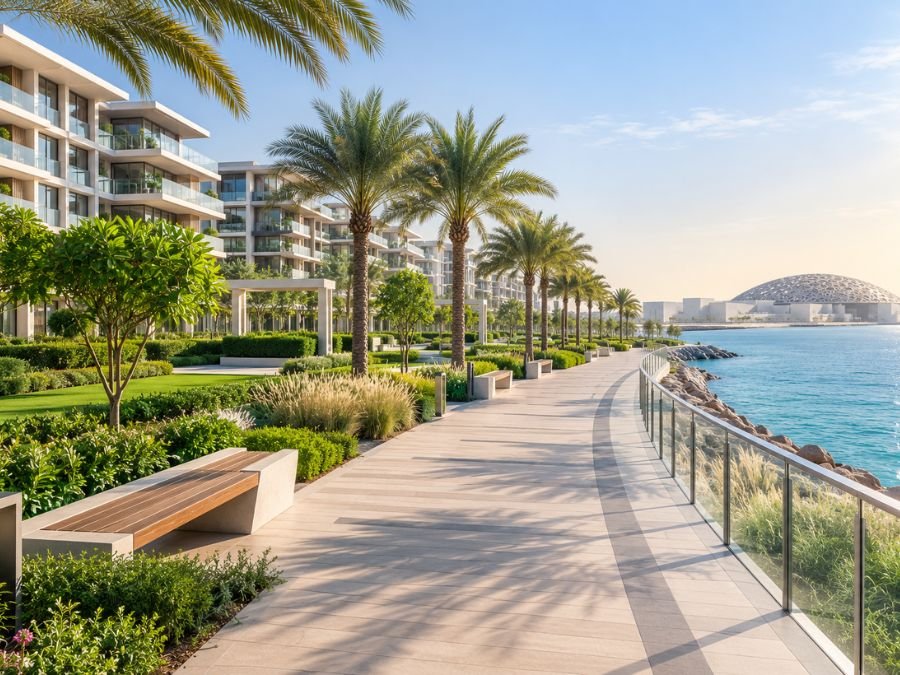
Marsa Al Saadiyat’s own confirmed masterplan makes the point directly, built around roughly 140 kilometres of interconnected walking paths and a 46-kilometre cycling track, with a landscaped central park extending towards the waterfront and connecting to a network of linear green spaces. That is not incidental infrastructure attached to a residential release. It is the primary organising principle of the entire masterplan, described before the residential unit mix itself.
According to a recent MERED buyer insights survey compiled from direct engagements in Q1 2026, amenities and wider lifestyle offerings ranked at 75% importance among Abu Dhabi buyers, with strong emphasis on wellness infrastructure, resort-style environments, outdoor leisure spaces, and integrated community design — a close second only to waterfront views themselves at 80%. Wellness is no longer a supporting amenity. It has become one of the two dominant purchase drivers in Abu Dhabi’s premium segment.
3. What “Wellness-Led” Actually Looks Like in Practice
The shift is visible in the physical infrastructure being built into Abu Dhabi’s newest masterplans, not just their marketing language. At Yas Point, Aldar’s new waterfront destination on Yas Island, the design brief was explicit: a fully walkable layout connected by parks and waterfront pathways rather than built around vehicle access as the primary means of navigation. The Canopies, the first residential release within that masterplan, is positioned around a large central green space specifically to encourage a walkable, indoor-outdoor lifestyle, with more than 10,000 sqm of open landscaped space, shaded pathways, gardens, and dedicated outdoor wellness areas.
Marsa Al Saadiyat extends the same principle at a far larger scale, with its 140 kilometres of walking paths and 46-kilometre cycling network designed to place everyday services within walking, cycling, or short driving distance of every home, and a scenic waterfront walkway connecting residents directly to the Saadiyat Cultural District’s museums and cultural venues on foot. At the community level, established projects like Reem Hills on Al Reem Island have taken the concept further still, featuring dedicated spaces for pilates, sound healing, and breathing exercises alongside waterside jogging tracks — evidence that wellness-led design in Abu Dhabi now spans everything from city-scale infrastructure to individual amenity programming.
4. Why This Matters More for Younger Buyers and Families
This shift is generational as much as it is architectural. Industry analysis of the UAE’s wellness real estate segment points to remote and hybrid work becoming common as a key catalyst, transforming homes into multi-purpose spaces where people live, work, exercise, and relax — prompting developers to redesign communities around wellness concepts rather than premium finishes or iconic design alone. The trend is described as especially visible among millennials and younger buyers who prefer experiences and lifestyle quality over traditional luxury symbols.
For families relocating to Abu Dhabi specifically, the priorities are practical rather than aspirational: cleaner air, safer outdoor spaces, and communities where children can spend meaningful time in nature. For young professionals, the driver is different but related — a growing focus on mental health and work-life balance is making wellness-oriented housing a genuine selection criterion rather than a nice-to-have. Both groups are increasingly evaluating Abu Dhabi’s wellness-led communities not as a lifestyle indulgence, but as a baseline expectation for where they choose to live long-term.
5. Is It Worth Paying a Premium For?
The honest answer, based on the data available, is generally yes — but the premium needs to be evaluated project by project rather than assumed universally. Industry analysis of the UAE wellness segment, now valued at USD 14.6 billion, indicates that the market increasingly rewards developers who adopted wellness principles early, with stronger pricing and long-term buyer appeal becoming defining characteristics of the segment. Waterfront and wellness-anchored communities have historically demonstrated stronger capital appreciation and better resilience during market cycles, because buyers are purchasing access to a lifestyle that cannot easily be replicated elsewhere, not simply square footage.
The caveat worth stating plainly: not every development marketed with wellness language delivers the infrastructure to back it up. The distinction between genuine wellness-led design — measured in kilometres of connected pathways, verified green space ratios, and integrated amenity programming — and wellness as a marketing keyword attached to a conventional layout is significant, and it is exactly where resale and rental performance tend to diverge over time. For investors weighing whether a specific project’s wellness premium is structurally justified, consulting a capital appreciation specialist in Abu Dhabi who can assess the actual infrastructure behind the marketing is the most reliable way to make that call before committing capital.
6. Conclusion
What is happening across Abu Dhabi’s newest developments is a genuine shift in what luxury means in the emirate, not simply an evolution in marketing language. Marsa Al Saadiyat’s 140 kilometres of walking paths, Yas Point’s park-centric masterplan, and the broader UAE wellness real estate market’s growth to USD 14.6 billion all point in the same direction: buyers are increasingly purchasing how a place makes them feel, alongside how it looks and what it costs. For buyers and investors trying to separate genuine wellness-led design from surface-level marketing, and to understand which developments carry that premium sustainably, our team is ready to help you identify the right fit for your lifestyle and investment goals.
It refers to developments designed around wellbeing infrastructure — interconnected walking and cycling paths, green space ratios, waterfront access, and community connection — as a primary design principle rather than an added amenity. Recent examples include Marsa Al Saadiyat’s 140km of walking paths and Yas Point’s fully walkable masterplan. Explore Abu Dhabi’s wellness-led communities with expert guidance.
Industry analysis indicates yes, generally, with developers who adopted wellness principles early seeing stronger pricing and long-term buyer appeal. Waterfront and wellness-anchored communities have historically shown stronger capital appreciation and resilience through market cycles compared to standard developments.
The shift is linked to the rise of remote and hybrid work, which transformed homes into multi-purpose spaces, alongside growing awareness of mental health and work-life balance among millennial and younger buyers who increasingly prefer lifestyle quality and experience over traditional luxury symbols. For guidance on which Abu Dhabi communities best match this priority, consult a capital appreciation specialist in Abu Dhabi.
The UAE wellness real estate market has grown to an estimated USD 14.6 billion, with developers increasingly measured on lifestyle factors including social connection, mental wellbeing, and community design, alongside traditional sustainability metrics.
Look for measurable infrastructure commitments — specific kilometres of walking or cycling paths, verified green space ratios, dedicated wellness programming, and integrated amenity design — rather than general lifestyle language alone. Working with a licensed property consultancy in Abu Dhabi that can assess the underlying infrastructure is the most reliable way to evaluate genuine wellness-led value before purchasing.
Join The Discussion