
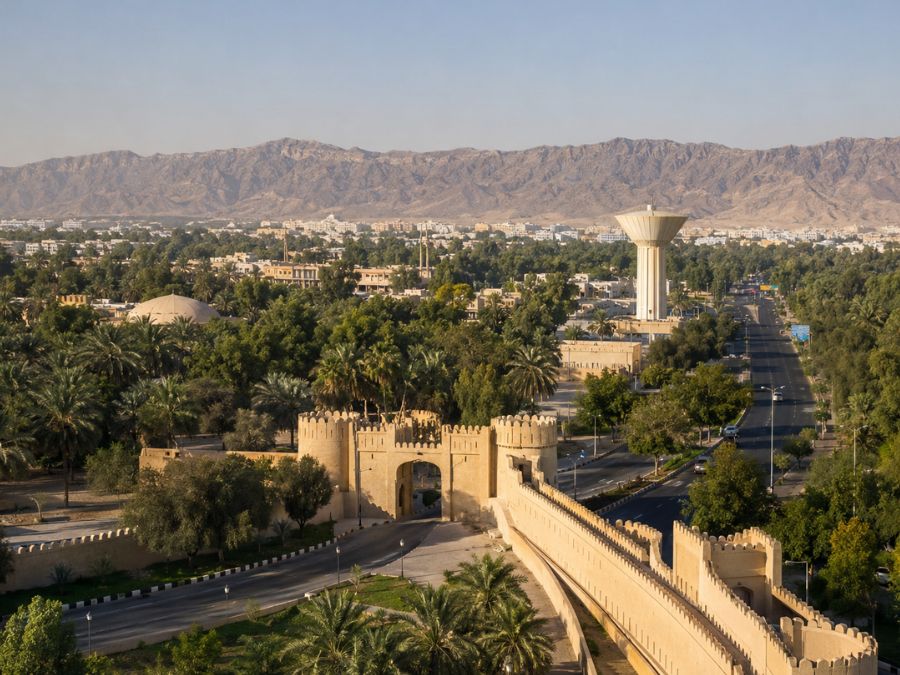
The City Doing Everything Right While Nobody Is Watching
There is a specific moment in every real estate cycle where an established, fundamentally sound market sits at maximum value relative to its price — before the broader investor base catches up to what the data already shows. Al Ain is at that moment right now. Abu Dhabi’s second city, the UAE’s only UNESCO World Heritage urban destination, the Arab Capital of Tourism for 2026, and the recipient of AED 36.95 billion in personally-endorsed government residential investment is available to private investors at entry prices that have not yet absorbed any of those credentials. That gap between fundamental quality and current pricing is the investment opportunity — and it will not exist indefinitely.
Al Ain holds UNESCO World Heritage Site status covering the Al Ain Oasis, Hili, Jebel Hafeet, and associated cultural landscapes with evidence of human presence spanning 8,000 years, and has earned the title of Gulf Tourism Capital for 2025 and Arab Capital of Tourism for 2026. These are not municipal marketing designations. They are internationally recognised and independently awarded distinctions that place Al Ain in a category of global cultural credibility that no speculative property market can manufacture — and that provide a permanent quality floor for residential values that operates independently of market cycles.
The AED 36.95 Billion Signal That Changes Everything
In September 2025, UAE President His Highness Sheikh Mohamed bin Zayed Al Nahyan personally attended the announcement of agreements to develop five residential communities in Al Ain, offering 10,480 housing units at a total cost of AED 36.95 billion, carried out in partnership with Aldar Properties, Bloom Holding, Wahat Al Zaweya Real Estate, and IMKAN Properties.
The five communities form part of the broader AED 106 billion Abu Dhabi housing programme — the largest Emirati residential housing commitment in the country’s history. Each community will include commercial centres, mosques, schools, parks, green areas, and sports facilities, delivered to the highest international standards within a five-year timeline to 2029.
| Al Ain Government Housing Commitment | Detail |
| Total investment | AED 36.95 billion |
| Total units | 10,480 housing units |
| Number of communities | 5 fully integrated |
| Developers | Aldar, Bloom Holding, Wahat Al Zaweya, IMKAN |
| Delivery timeline | 5 years to 2029 |
| Part of broader programme | AED 106 billion, 13 communities, 40,000+ units across Abu Dhabi emirate |
| Facilities in each community | Schools, mosques, commercial centres, parks, sports facilities |
The Al Ain projects will integrate with existing infrastructure and increase housing capacity significantly, designed for families who want suburban lifestyles with urban amenities. For private investors, 10,480 new government-backed permanent residents — predominantly UAE national families with stable government employment — generate a proportional and sustained increase in demand for surrounding private rental stock. That demand does not fluctuate with global sentiment. It is structurally embedded in the city’s residential base from the moment those families move in, and it creates exactly the stable, long-term tenant environment that yield-focused investors spend years searching for in markets that cannot deliver it structurally. For investors wanting to identify the best private market entry points surrounding this government commitment, engaging with a licensed real estate brokerage in Abu Dhabi that covers Al Ain’s emerging residential communities is the most efficient first step.
Four Investment Drivers Working Simultaneously
Rental yields anchored by institutional demand. The Al Ain rental market remains steady, supported by long-term tenancy demand, government-linked employment, and an overall shortage of quality, mid-size family housing. Unlike larger UAE cities, Al Ain’s tenant base is primarily composed of residents seeking stable, multi-year leases rather than transient, short-term arrangements. Healthcare workers at Tawam Hospital, academic staff and students at UAE University — the oldest university in the UAE — and government employees across Al Ain’s established civil service represent a tenant profile that delivers occupancy resilience through any market condition. Gross rental yields in Al Ain’s established villa communities consistently range from 7% to 9%, competitive with Abu Dhabi city’s strongest mid-market segment and significantly above the premium island communities where capital is currently concentrated.
Entry prices at pre-announcement positioning. The median listing price for residential properties in Al Ain stands at approximately AED 970,000, with median sold prices averaging AED 940,000 — reflecting a healthy, balanced market where buyer and seller expectations are closely aligned. Villas and townhouses that carry AED 3 million to AED 5 million price tags on Yas Island are available in Al Ain’s premium communities at a fraction of that cost. That pricing reflects a market that has not yet absorbed the full implication of the AED 36.95 billion government commitment — which is exactly the window that early-mover investors identify and act within before it closes.
Tourism infrastructure with international recognition. Al Ain’s unique blend of cultural heritage, world-class hospitality, and adventure tourism has earned it the prestigious title of Arab Capital of Tourism for 2026, while its UNESCO designation covers cultural landscapes with evidence of human presence spanning 8,000 years. Jebel Hafeet, at 1,240 metres one of the UAE’s most iconic natural landmarks, anchors the city’s outdoor lifestyle positioning alongside the Al Ain Oasis, Al Ain Zoo — one of the largest in the world — and Al Jahili Fort. DCT Abu Dhabi has launched a Hotel Refurbishment Scheme offering a capital expenditure rebate of up to 12% on eligible renovation investments, with an additional 5% premium rebate for upgrades from unbranded to branded hotels — a direct government investment in elevating Al Ain’s hospitality infrastructure ahead of its Arab Capital of Tourism year.
Rail connectivity that is repricing the market. Etihad Rail’s passenger network — launching in 2026 — directly strengthens Al Ain’s connectivity case in two directions simultaneously. As one UAE property CEO confirmed, Etihad Rail makes Al Ain a realistic base for remote professionals who can now be in the capital or the coast in under an hour — creating a complete repricing of land value not based on geography but based on accessibility. Residential and commercial values along the Etihad Rail route could climb up to 30% and rents by up to 20%, according to developers and analysts, with experts describing it not just as transport infrastructure but as a map of opportunities. Separately, the Hafeet Rail — a 300-kilometre cross-border rail link connecting Etihad Rail’s Abu Dhabi network through Al Ain to the port of Sohar in Oman — positions the city at the intersection of two major infrastructure investments simultaneously, a convergence no other UAE city currently occupies.
The Developers: Institutional Quality Coming to Al Ain
The four developers confirmed for Al Ain’s government-backed communities are among the most credible residential developers operating in Abu Dhabi today. Their simultaneous commitment to Al Ain is the strongest possible signal of the city’s long-term investment grade.
Aldar Properties is Abu Dhabi’s largest listed developer, with a verified track record spanning Saadiyat Island, Yas Island, Al Raha Beach, and multiple sell-out off-plan launches in 2025 and 2026. Bloom Holding is the developer of Bloom Living — one of the UAE’s most successful family-focused master-planned communities. IMKAN Properties developed Makers District and Nudra on Saadiyat Island, bringing design-forward community credentials and verified appreciation track records. Wahat Al Zaweya Real Estate brings community-focused development expertise precisely aligned with the social cohesion objectives that underpin the Al Ain programme specifically.
When these four developers commit to a single city simultaneously under direct presidential oversight, the quality standard of what is being delivered is not speculative. It is guaranteed by institutional track record, government partnership, and contractual delivery obligations to the Abu Dhabi Housing Authority.
Conclusion
Al Ain is not a secondary market being talked up by agents seeking a new narrative. It is Abu Dhabi’s second city, the Arab Capital of Tourism for 2026, a UNESCO World Heritage destination with 8,000 years of continuous habitation, the home of the UAE’s oldest university, one of the region’s leading hospitals, and the recipient of AED 36.95 billion in government-backed residential investment personally endorsed at the highest level of UAE leadership. Entry prices have not yet reflected the full weight of that combination. Rental yields are among the most resilient in the UAE. Two separate rail investments are approaching. And the developers building the government programme are the same names generating record sales across Saadiyat Island and Yas Island. The investors who identify Al Ain before the wider market does will benefit most from everything that combination delivers.
Al Ain is receiving AED 36.95 billion in government-backed residential investment across five integrated communities delivering 10,480 housing units, signed in the presence of the UAE President in September 2025. Combined with UNESCO World Heritage status, its designation as Arab Capital of Tourism for 2026, entry prices significantly below Abu Dhabi city and Dubai, and incoming Etihad Rail connectivity, it represents one of the UAE’s most structurally compelling undervalued property markets. Explore opportunities through a top-rated property agency in Abu Dhabi.
Al Ain’s rental market is supported by long-term tenancy demand, government-linked employment, and a shortage of quality family housing, with tenant demand driven primarily by residents seeking stable, multi-year leases. Gross rental yields in established villa communities range from 7% to 9%, underpinned by healthcare workers at Tawam Hospital, UAE University staff and students, and government employees — a structurally stable tenant base independent of market sentiment.
Property prices near Etihad Rail stations are forecast to rise by up to 30% and rents by up to 20%, with experts describing the railway as a map of opportunities that reshapes where people choose to live, work, and invest. Al Ain also benefits from the separate Hafeet Rail — a 300-kilometre link connecting the Etihad Rail network through Al Ain to Sohar port in Oman — positioning the city at the intersection of two major rail investments simultaneously. For investment guidance on rail-corridor positioning, consult an Abu Dhabi real estate investment advisor.
Al Ain is the only city in the UAE with UNESCO World Heritage Site status — a designation covering the Al Ain Oasis, Hili, Jebel Hafeet, and associated cultural landscapes. This internationally recognised distinction provides a permanent quality signal and long-term residential value floor that speculative markets cannot manufacture, placing Al Ain alongside cities like Bath, Bruges, and Kyoto in terms of cultural protection and heritage-anchored value.
Join The Discussion